

You don’t have to “lose everything” to want help.
You don’t have to be twice your age, divorced, and bankrupt to go to treatment.
You can just be a 22-year-old who’s tired of blacking out, sick of social anxiety drinking, and wondering, “Is this really supposed to be fun?”
Alcohol addiction treatment in places like San Diego isn’t just built for the worst-case scenario. It’s also for people like you—the ones who are already choosing different.
1. You’re Not Weird for Wanting Help Early
Maybe you haven’t been arrested. Maybe your grades are fine. Maybe you still go to work, smile at brunch, and keep your hangovers quiet.
That doesn’t mean you’re okay.
If you’re wondering whether your drinking is “bad enough” for treatment, you’re not alone. A lot of us grew up thinking help was only for people who hit the lowest of lows. But truthfully? The earlier you notice something’s off, the more power you have to change it.
And choosing recovery before everything breaks down? That’s not weakness. That’s strength with foresight.
2. Blackouts Aren’t a ‘College Thing’
“I don’t remember how I got home.”
“I woke up and my texts didn’t make sense.”
“I laughed it off, but I was scared.”
Sound familiar?
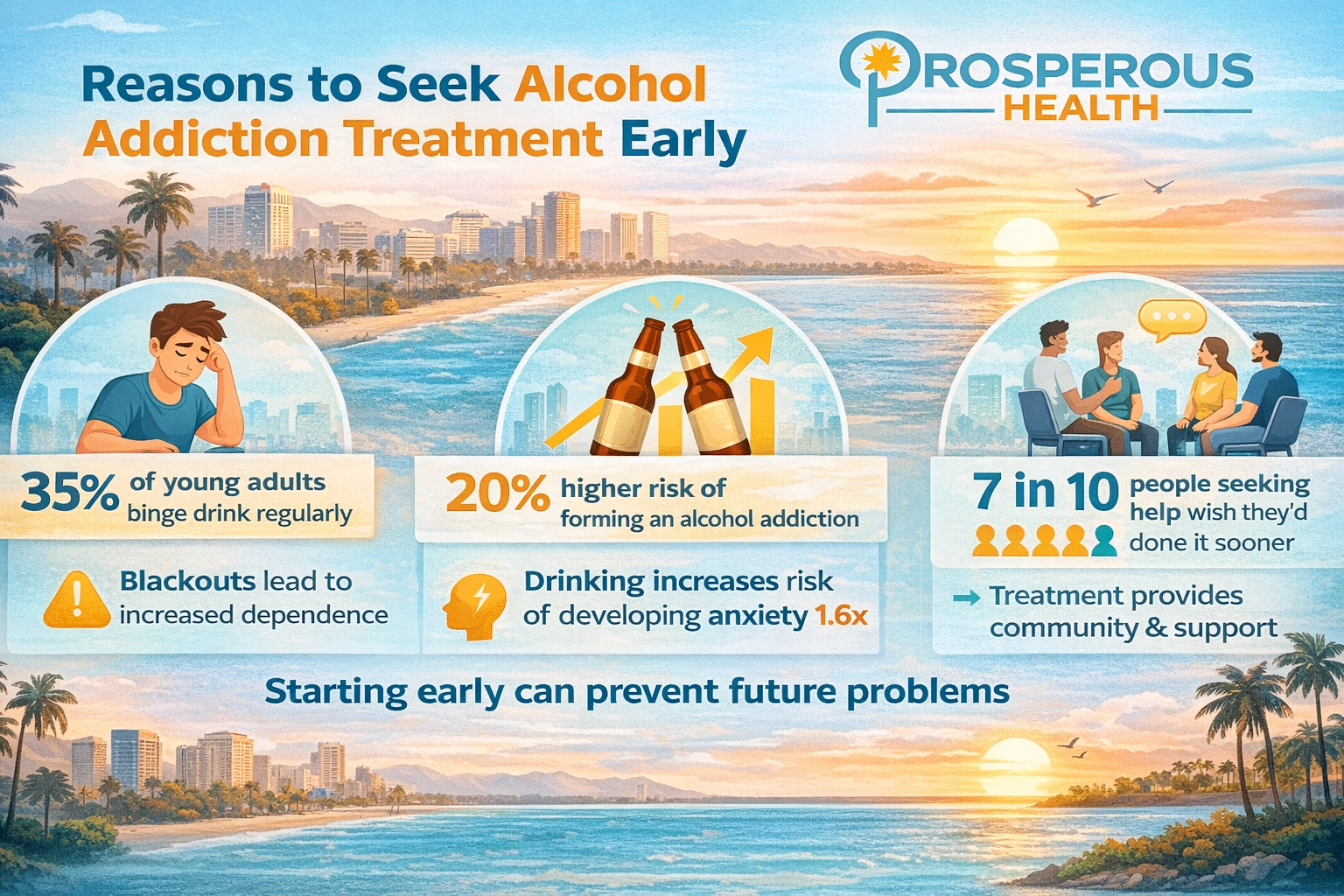
Blackouts are often joked about in college culture, but they’re actually your brain signaling distress. When alcohol stops the brain from forming memories, it’s not a quirky side effect—it’s a health risk. The more you experience them, the more likely you are to develop long-term memory problems and increased alcohol dependence.
Treatment gives you a safe space to talk about these moments without shame—and figure out what they mean.
3. Drinking to Fit In Gets Old Fast
Let’s be real: being the only sober one at the party can feel like showing up to a costume party in jeans.
Early sobriety comes with that awkward “What do I say when they hand me a shot?” panic. But here’s the thing—many of us started drinking not because we loved the taste or vibe, but because we hated how we felt without it.
If you’ve ever said, “I need a drink to feel normal,” that’s a big clue something deeper is going on.
Alcohol addiction treatment helps you get curious about that. It offers real tools—not just “resist peer pressure” advice—to build confidence and social connection that doesn’t hinge on a buzz.
4. Being “High-Functioning” Doesn’t Mean You’re Okay
If your life looks good from the outside, people might not suspect a thing. But the inside?
The inside can be a mess even when your grades are high or your job performance is solid.
Alcohol misuse doesn’t always look like rock bottom. Sometimes it looks like 10pm whiskey to “come down” from the day. Or making rules like “only on weekends” and breaking them. Or promising “just two” and waking up dizzy, ashamed, and alone.
You don’t need to wait for a full breakdown. Treatment can help you build from where you are—not start over from scratch.
5. Early Recovery = Early Growth
When you stop numbing, you start feeling again. That can be rough at first—but it’s also how you begin to grow.
Alcohol addiction treatment isn’t just about stopping drinking. It’s about building emotional skills, learning who you are without substances, and getting unstuck.
You might find that the anxiety you thought was “just part of you” was fueled by alcohol. You might discover you’re more creative, more grounded, more connected than you thought possible.
“I didn’t get sober to be boring. I got sober because I wanted my brain back.”
— Outpatient Client, San Diego
6. You Deserve to Heal Before It Gets Worse
Some people wait until their relationships implode, they lose their job, or they end up in the ER. But you don’t have to.
Your pain doesn’t have to be visible to others to be valid.
If alcohol is getting in the way of the life you want—even just a little—treatment is an option. You don’t have to hit some mythical bottom to start climbing.
At Prosperous Health, our alcohol addiction treatment program in San Diego is built for all stages of readiness. Whether you’re all-in or just curious, there’s a place for you.
7. Your Friends Might Be Curious Too
You might feel like the odd one out—but you’re probably the brave one out.
Even if no one says it, other people in your circle are likely wondering the same things:
“Do I drink too much?”
“Would I still be fun without it?”
“Is this hangxiety worth it?”
By choosing to explore sobriety or treatment, you give your friends permission to be honest with themselves too. And while you don’t owe anyone inspiration, it’s worth knowing—you’re not alone in feeling like this can’t be all there is.
8. Alcohol Messes with Mental Health—Fast
Alcohol and mental health are deeply linked. Anxiety, depression, panic attacks, dissociation—it all gets worse under the influence.
You might be drinking to cope with how bad you feel. But ironically, the alcohol is often what’s keeping you in that cycle.
Treatment helps you untangle this. It can reveal whether you’re dealing with underlying conditions like anxiety or trauma, and offer healthier ways to manage them than drinking until you numb out.
And you’ll finally have a team that sees all of you—not just your symptoms.
9. You Don’t Have to Do This Alone
This might be the most important one.
Sobriety can feel lonely. Not just because people expect you to drink, but because they don’t get it. They don’t understand what it feels like to choose clarity over chaos—or how hard it can be to stick with it when no one else is.
Alcohol addiction treatment gives you community. It’s not about lectures or being “fixed.” It’s about honest connection with people who’ve been where you are—and who won’t flinch when you say the messy, scary, or real stuff.
FAQ: Alcohol Addiction Treatment for Young Adults
Is treatment only for people with severe alcohol problems?
Nope. Treatment is for anyone whose relationship with alcohol is causing distress, confusion, or disruption. You don’t need a formal diagnosis or a dramatic rock bottom to seek support.
What if I’m not sure I’m “addicted”?
That’s okay. Many people come to treatment unsure of labels. You can explore your relationship with alcohol without pressure to define it right away. The point is to feel better—whatever that path looks like.
Will I be in groups with older adults?
Some programs are mixed, but many centers (like Prosperous Health) offer age-relevant programming. We understand the unique pressures of being young and sober—and build groups that reflect your stage of life.
Is treatment in San Diego confidential?
Absolutely. All services at Prosperous Health are fully confidential. Whether you’re in college, working, or still figuring things out, your privacy matters.
What does alcohol addiction treatment actually involve?
Depending on your needs, it could include outpatient therapy, group counseling, trauma support, skill-building sessions, or even flexible virtual options. You’ll never be pushed into a one-size-fits-all plan.
Learn more about what treatment looks like at Prosperous Health.
You don’t have to wait for things to fall apart.
If something feels off, you’re allowed to explore help now—not later.
Call (888)308-4057 or visit Prosperous Health’s Alcohol Addiction Treatment page to see what support could look like for you in San Diego.