
When I got diagnosed with depression, I wasn’t relieved. I was terrified.
People talk about diagnoses like they’re answers. But all I heard was: This is forever. This is who you are now.
Suddenly, every quiet moment felt louder. Every decision—what to eat, whether to take the meds they gave me, whether to tell anyone—felt like it was now part of some bigger, scarier thing. “Depression.”
I wanted to believe I could fix it on my own. I told myself I just needed sleep. A better routine. Maybe a vacation. Anything but a label. Anything but medication.
I came so close to walking away from depression treatment completely.
But I didn’t. And I’m still here—still learning, still living, still more myself than I’ve been in years.
This is the story of how close I came to giving up on treatment—and what made me stay.
I Didn’t Feel “Depressed Enough”
At first, I didn’t even think I deserved treatment. I wasn’t crying all the time. I got out of bed. I showered. I smiled when I needed to.
But I also felt like a ghost inside my own life. I went through the motions, felt like I was underwater half the time, and couldn’t remember the last thing that brought me actual joy.
So when the clinician said, “You meet the criteria for depression,” my brain immediately argued:
But I’m functional. I don’t have it that bad. Isn’t this just life?
I thought I had to be completely wrecked before I could ask for help. Turns out, functioning isn’t the same thing as thriving. And pain that’s quiet is still pain.
The Word “Medication” Made Me Panic
I didn’t want to take anything. That was the line I drew for myself.
I’d go to therapy. I’d talk. I’d journal. But pills? No thanks.
I was afraid medication would change me. That I’d lose something—my spark, my depth, my creativity. What if I felt nothing? What if I couldn’t cry? What if it numbed the parts of me that made me me?
But what I didn’t realize was that depression was already doing that.
It had already numbed me. Already hollowed me out. I wasn’t protecting my identity—I was protecting the fog that had taken it over.
I Spent Days Researching Worst-Case Scenarios
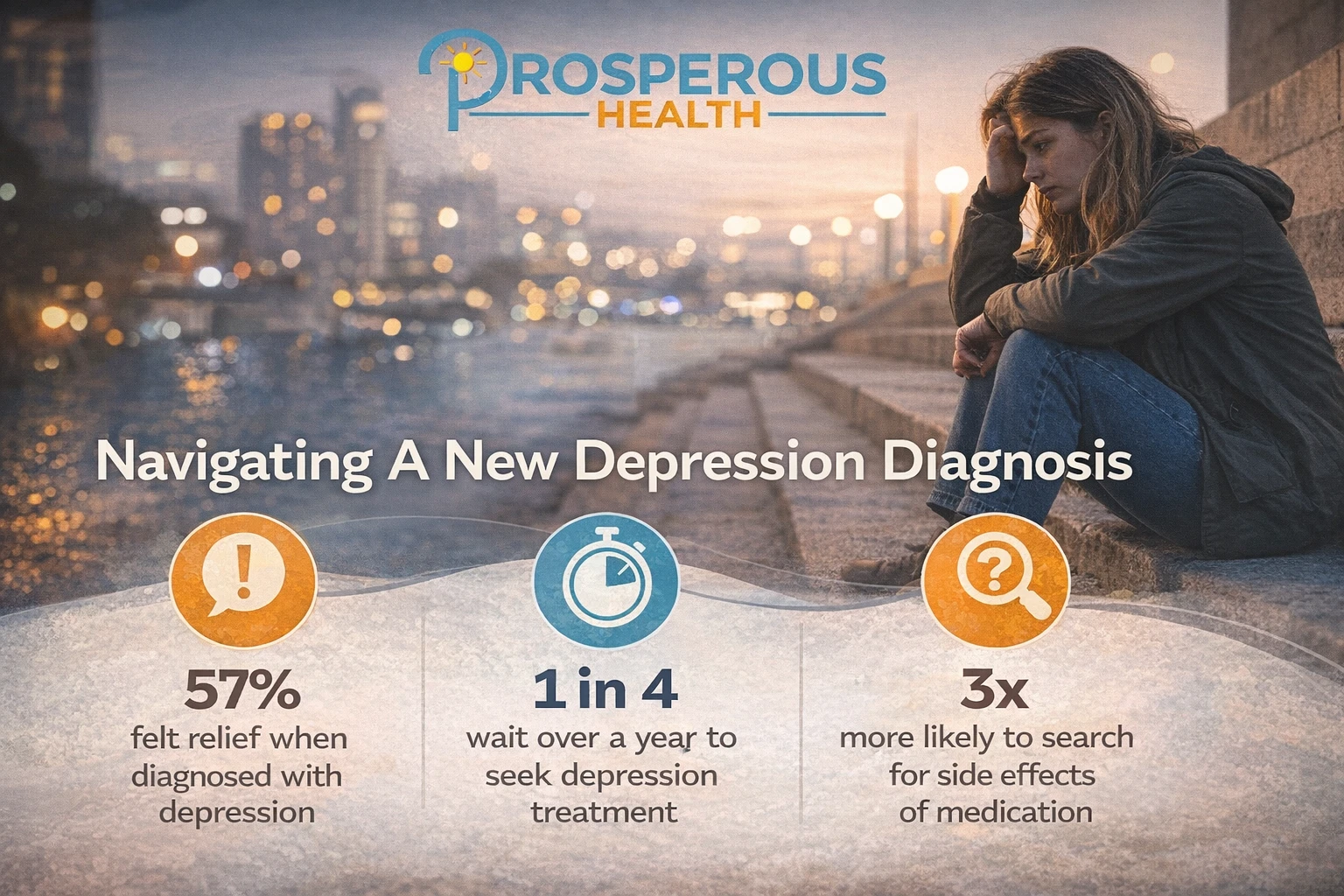
I read every Reddit thread, every side effect list, every personal blog about medication gone wrong. I Googled for hours. Convinced myself I could think my way through it.
I wasn’t researching for clarity. I was looking for a reason to stay scared.
And I found it, of course. You always find what you’re looking for online. But none of it actually helped me understand what I needed. It just made me more paralyzed.
What I didn’t search for? All the people quietly getting better. The ones who didn’t blog because they were finally living again.
The First Pill Was the Hardest
When I finally took the medication, I was convinced something would snap. That I’d feel instantly numb or wrong or… something.
But it was subtle. Almost anticlimactic.
No fireworks. No panic. Just… a slight loosening. A quiet sense that maybe I didn’t have to brace against the day so hard. Like the volume dial on my inner critic got turned down a notch.
It wasn’t magic. It was just enough to make therapy actually work. Enough to help me show up to my own life a little more.
And over time, that “little more” added up.
Therapy Helped Me Make Sense of It All
Medication didn’t solve everything. But it gave me the capacity to engage in therapy. To feel things and stay present instead of shutting down.
My therapist didn’t tell me what to do. She listened. Asked questions I didn’t know I needed to hear. Helped me see patterns I thought were just personality traits.
I started to realize that my brain wasn’t broken. It was protecting me. But some of the ways it protected me—like shutting down emotion, like disconnection—weren’t helping anymore.
Therapy helped me grieve the parts of myself I’d lost—and imagine who I could be if I stopped surviving and started healing.
If you’re in the Valley, CA, there are local therapy and support options that understand this delicate stage: newly diagnosed, uncertain, but quietly hoping things could feel different.
I Didn’t Trust the Progress at First
There were days I felt better and wondered if I still needed treatment. Days I thought, Maybe I’m fine now, maybe I imagined all of this.
That’s the thing about depression—you doubt even your own healing.
But I stuck with it. Because I realized I didn’t want to just “not be depressed.” I wanted to feel alive again. To feel joy without guilt. To have energy that didn’t come from panic or caffeine.
That required consistency. And grace. And being willing to stay with the process even when I couldn’t see the end.
There Was No Big Breakthrough—Just Lots of Little Ones
Recovery didn’t show up as a single moment. It came in fragments.
It was texting a friend back without overthinking.
It was waking up and not dreading the day.
It was laughing at a movie and realizing, Oh—I actually felt that.
Each one of those moments stitched something back together in me.
If you’re in Palos Verdes, CA, you can access support that’s paced to your story—no pressure to “transform overnight,” just a steady path back to yourself.
FAQ: For the Version of You Still on the Fence
Q: What if the meds change who I am?
A: You’re still you. If anything, they quiet the static so you can hear yourself again. You don’t lose your essence—you get access to it.
Q: Do I have to stay on meds forever?
A: Not necessarily. Many people use them short-term. Your provider will work with you to reassess over time. You stay in charge.
Q: What if I don’t want to tell anyone I’m in treatment?
A: You don’t have to. Privacy is part of care. Start small. Let the support be yours before you invite others in.
Q: How do I know if I’m “really” depressed?
A: If you’re asking, it’s worth exploring. Depression doesn’t have to look like falling apart. Sometimes it looks like slowly fading. And that’s just as real.
I Didn’t Just Survive—Eventually, I Started to Want More
The biggest shift wasn’t feeling better. It was wanting better.
Wanting to be present. Wanting to reach out. Wanting a life that felt less like endurance and more like possibility.
If you’re newly diagnosed, scared of the path ahead, and secretly wondering if this is all there is—I see you. I was you.
Start where you are. Scared is okay. Confused is okay. Hopeful, even just a sliver of it, is more than enough.
Call (888) 308-4057 to learn more about our Depression Treatment in California. You don’t have to believe it’ll work yet. You just have to believe in the part of you that wants to try.