

If you’ve tried therapy before and thought, This didn’t help, I believe you.
I’m not here to convince you that your past experience was “wrong” or that you just didn’t try hard enough. I’m a clinician, and I’ve worked with hundreds of people who came in saying some version of the same thing:
“I opened up, I showed up, I wanted it to help—and it didn’t.”
There’s a lot of talk about depression treatment “working”—like it’s a formula. You go, you talk, you feel better. But here’s the part most people don’t say out loud: treatment can’t work if you don’t feel safe. Not emotionally, not socially, and not in your body.
And if no one has said this yet: that’s not your fault.
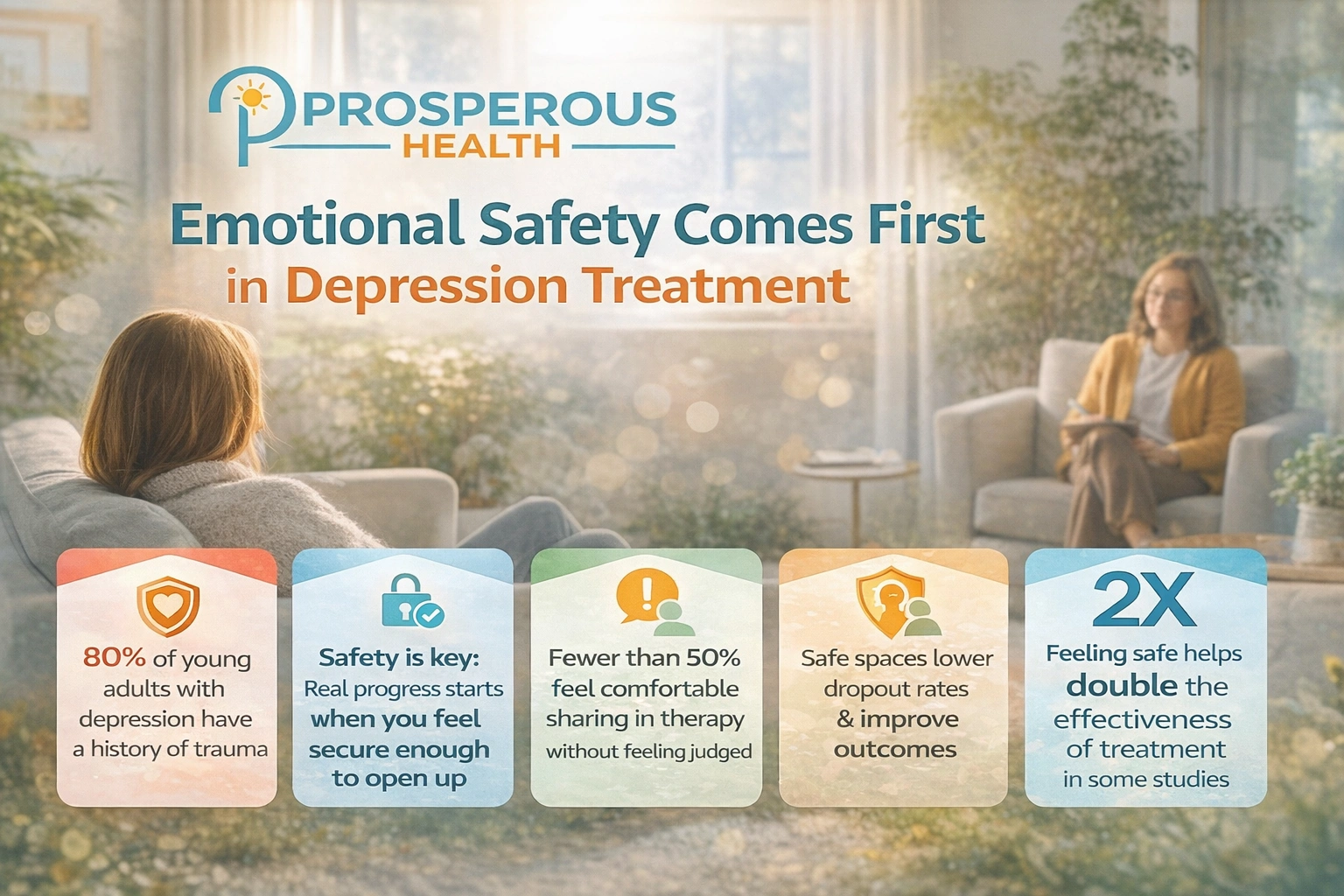
Emotional Safety Isn’t Optional. It’s the Foundation.
The biggest myth about therapy is that progress starts with honesty. It doesn’t. It starts with safety.
You can’t be honest if you don’t feel safe. You can’t talk about the dark stuff—the real stuff—if your nervous system is screaming get out of here the entire time. And your brain literally can’t process new information when it’s in survival mode.
And yet, too many people get shoved into treatment models that are rigid, cold, or performative. They’re expected to share on a schedule. Open up before they’re ready. “Engage” even if their gut is saying, This place doesn’t feel right.
That’s not healing. That’s emotional whiplash. And for people already carrying trauma or long-term depression, it only reinforces the idea that “nothing helps.”
What “Unsafe” Looks Like in Real Life
You don’t have to have a dramatic story for treatment to feel unsafe. Sometimes, it’s subtle—but powerful. Like:
- Walking into a group and realizing you’re the only one under 30 (or over 50).
- Feeling like your therapist isn’t really listening—just taking notes.
- Trying to explain why you’re not on meds, and getting shut down.
- Saying something vulnerable and having the room go silent.
- Pretending you’re doing better than you are so you don’t get “that look.”
- Knowing the answers they want—and giving them.
I’ve heard every one of these stories in my office. Not from people who are resistant. From people who want to get better—but haven’t found a place that actually sees them yet.
You’re Not Broken. You’ve Just Been Unsupported.
Let’s get this clear: not every treatment space deserves your trust. Just because someone has credentials doesn’t mean they know how to make you feel emotionally held.
And just because treatment didn’t work in one setting doesn’t mean you are unfixable.
Sometimes, the system fails people. It assumes you’re ready to talk before you’re ready to feel. It rushes you through “coping skills” when what you need is a space to be real without being managed.
At Prosperous Health, we design our programs differently—because we’ve met too many people burned out by therapy that missed the point.
If you’re exploring options again and want something that puts connection before content, we offer care in California that’s built around trust, not pressure.
What Good Depression Treatment Actually Feels Like
Good therapy doesn’t feel perfect. But it should feel like:
- A space where your body stops bracing.
- A person who actually waits to hear your answer.
- A group where you’re not the “weird one.”
- A treatment plan that reflects you, not a textbook.
- Permission to not be okay—without needing to explain why.
- Progress that includes pause. Because safety always comes first.
Depression treatment shouldn’t feel like emotional performance. It should feel like a place where your guard starts to drop—slowly, naturally, because it finally can.
Facilities that offer help in Palos Verdes understand that people who’ve been through “failed” treatment need more than a plan. They need repair.
Let Me Tell You About “J”
J was 28. They’d tried therapy three times. Once in college, once in a community clinic, and once through their job. They walked in our door with their arms crossed and their hope at 2%.
They didn’t want to do an intake. They told me, flat-out, “This probably won’t work, but my sister said I should try one more time.”
We didn’t rush. No worksheets. No “tell me your trauma in the first session.” We just talked. About what they hated about therapy. What didn’t feel safe. What they actually needed from a space like this.
And week by week, they softened. Not into compliance—into presence. By month three, they weren’t “cured.” But they were laughing again. Sleeping better. Writing again. Wanting things again.
What changed? Not the structure. The safety. That’s where the real work starts.
If You’ve Been Hurt by Treatment, That Matters
Your pain with therapy is valid. If you’ve felt dismissed, rushed, stereotyped, or just invisible—that matters.
What happened in that space might be part of the wound, not just the healing.
You’re allowed to be cautious. You’re allowed to come back slowly. And you deserve a space that doesn’t punish that caution—but honors it.
At Prosperous Health, we take that seriously. If you’ve been let down before, we want to help you start again without starting over. If you’re skeptical, we won’t try to sell you hope—we’ll earn your trust one real moment at a time.
FAQs for People Who’ve Been Let Down by Depression Treatment
What if I already tried therapy and it didn’t work?
That’s real—and it doesn’t mean nothing will. Sometimes the setting, style, or timing wasn’t right. Good treatment adapts to your lived experience, not the other way around.
Do I have to retell everything to start again?
No. You only share what feels helpful. You don’t need to unpack your life story to begin healing. Sometimes safety starts with silence, and we honor that.
What if I’m angry about my last experience?
Bring that in. We welcome it. Anger is often grief in disguise—and it deserves space. You’re not “too difficult.” You’re someone who deserves to be treated like a person.
What makes Prosperous Health different?
We focus on emotional safety first. Our clinicians are trained to recognize when treatment is missing the mark—and we adjust. We don’t force disclosures or pretend progress looks the same for everyone.
Is group therapy required?
Not always. We offer individual, group, and hybrid models. If groups felt unsafe in the past, we’ll work with you to find a path that fits where you are now.
If you’re willing to try again—we’ll meet you where the damage left off.
Call (888) 308-4057 to learn more about our Depression Treatment in California.