

You already know something isn’t right.
Maybe you’ve known for months. Maybe for years. You’re tired in a way sleep doesn’t fix. You cancel plans you once looked forward to. You stare at your phone, wanting to respond to people you care about, and just… can’t.
And now you’re here — not because someone forced you, but because something inside you said, “I can’t keep doing this alone.”
If you’re considering reaching out for support through something like Depression Treatment, I want to walk you through what actually happens next. Not in clinical language. Not in brochures.
Just honestly.
Because when I first reached out, what scared me most was the unknown.
You Don’t Have to Have It All Figured Out
There’s this quiet belief that before you call for help, you need a clear explanation.
You don’t.
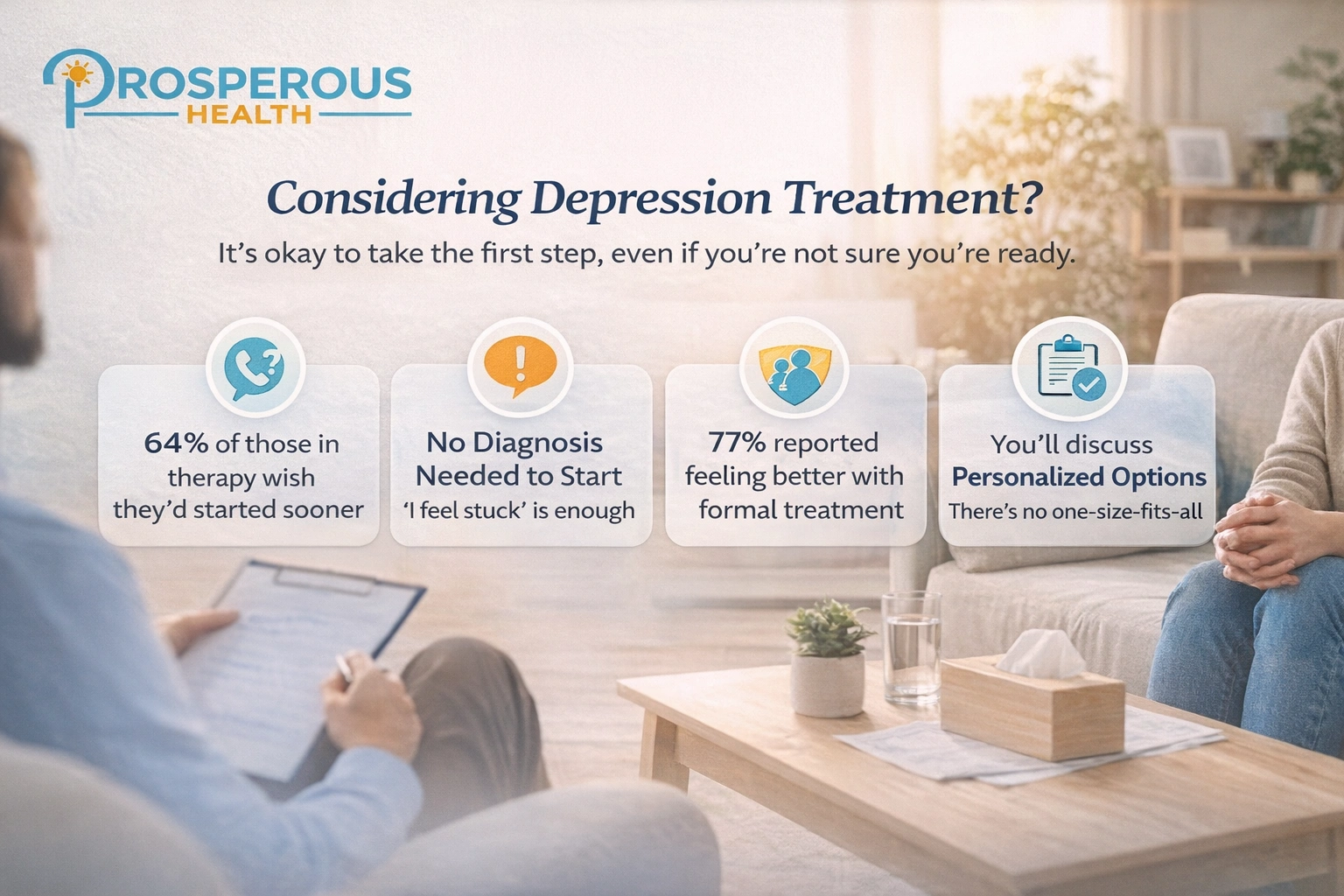
You don’t need a diagnosis.
You don’t need the “right” words.
You don’t need to be at your absolute worst.
When you make that first call or submit a form, it can be as simple as:
- “I feel stuck.”
- “I can’t get out of bed some days.”
- “I’m not myself.”
- “I don’t know what’s wrong, but something is.”
That’s enough.
The first conversation is usually about listening. Someone will ask what’s been going on and how long it’s felt this way. You’re not being judged. You’re not being graded on how well you explain your pain.
You’re being heard.
And for many people, that alone is unfamiliar — and relieving.
The Questions Might Feel Personal — But They’re Meant to Protect You
At some point, you’ll be asked questions that feel deeper.
You may be asked about:
- Sleep and appetite changes
- Energy levels
- Concentration and memory
- Anxiety or panic
- Thoughts about hurting yourself or not wanting to be here
That last one can feel especially heavy.
If someone asks about safety, it’s not because they assume the worst. It’s because your safety matters. Providers are trained to gently assess risk so they can respond appropriately — not overreact, not panic, but ensure you’re supported.
You don’t have to dramatize your pain to be taken seriously. And you don’t have to minimize it to seem strong.
Just answer honestly.
Honesty is the beginning of relief.
You’ll Talk About Options — Not Ultimatums
A lot of people hesitate to reach out because they’re afraid they’ll be told what to do.
That’s not how this works.
After the initial conversation, someone will usually walk you through different levels of support. That might include:
- Weekly therapy
- Multi-day weekly treatment with group and individual sessions
- Structured daytime care while living at home
- Or, if symptoms are severe, more intensive support
This isn’t a one-size-fits-all system. It’s a spectrum.
If you’re functioning but exhausted, your support plan will look different than someone who can’t get out of bed at all.
If you’re exploring care in California, there are options that allow you to stay connected to your daily life while getting meaningful support.
The goal isn’t to take your life away from you. It’s to help you live it more fully.
You Don’t Have to Be 100% Certain
One of the hardest parts of reaching out is the voice that says:
“What if I’m overreacting?”
“What if other people have it worse?”
“What if this doesn’t work?”
All of that can exist at the same time.
You don’t need certainty to start. You just need willingness.
Willingness to have one conversation.
Willingness to be honest.
Willingness to consider that things could improve.
When I reached out, I wasn’t confident. I was tired. That was enough.
Therapy Isn’t What TV Makes It Look Like
You won’t be lying on a couch while someone silently stares at you.
Therapy — especially early on — often feels like a guided conversation. You’ll talk about patterns, stressors, relationships, and the thoughts that loop in your head when you’re alone.
You might learn:
- How to recognize cognitive distortions
- How to build daily structure when motivation is low
- How to regulate intense emotion
- How to interrupt self-critical spirals
It’s practical. It’s relational. And it’s paced according to what you can handle.
You won’t be forced to dig into trauma before you’re ready. You won’t be rushed.
This isn’t about performing vulnerability. It’s about learning skills and building understanding.
Medication Is a Conversation — Not a Command
If medication is part of the discussion, it will be collaborative.
You can say:
- “I’m nervous about side effects.”
- “I don’t want to feel numb.”
- “I’d prefer to try therapy first.”
- “I’m open, but I need more information.”
A thoughtful provider will explain options clearly — what the medication does, how long it takes to work, possible side effects, and how progress is monitored.
The purpose isn’t to change your personality.
It’s to reduce the weight enough that therapy can actually work.
For some people, medication is temporary. For others, it’s longer-term. There isn’t one correct path.
There’s your path.
The First Few Weeks Can Feel Unsettling
Here’s something people don’t always expect:
When you finally stop pushing everything down, feelings can rise.
You might feel relief after your first session — like you can breathe deeper.
You might also feel more emotional than usual.
You may leave an appointment thinking, “Did I say too much?” or “Was that even helpful?”
This adjustment period is normal.
You’ve been holding things in for a long time. When the lid comes off, even gently, there’s movement.
Healing is rarely instant. It’s gradual. Sometimes uneven.
But even small shifts matter — sleeping a little better, answering one text, stepping outside for a short walk.
Progress doesn’t have to be dramatic to be real.
You’re Allowed to Move at Your Own Pace
No one will force you to commit to a lifetime plan in your first week.
You can try therapy and reassess.
You can explore structured care and see how it feels.
You can ask for adjustments.
Support isn’t a trap.
It’s a resource.
If you’re near the coast, you can look into treatment options in Palos Verdes. If you’re more inland, there’s care in Irvine designed to meet you where you are.
You don’t have to relocate your entire life to get help.
What It Means to Reach Out
It doesn’t mean you failed.
It doesn’t mean you’re weak.
It means you recognized that carrying everything alone isn’t sustainable.
For a lot of us, the bravest moment isn’t the therapy session. It’s the pause before we make the call.
That moment where we admit:
“I can’t keep pretending I’m fine.”
Reaching out for Depression Treatment isn’t about fixing yourself because you’re broken.
It’s about supporting yourself because you matter.
Frequently Asked Questions
What if I change my mind after the first call?
You’re allowed to. Reaching out doesn’t lock you into anything. You can gather information, ask questions, and decide what feels right. Even making the call is progress.
How do I know if my depression is “bad enough”?
If it’s interfering with your ability to function, connect, or feel like yourself, that’s enough. You don’t need to hit a breaking point. You deserve support before things collapse.
Will people think I’m weak?
Most people who seek help are strong enough to admit they need it. In reality, asking for help requires far more courage than pretending you’re okay.
How long does it take to feel better?
It varies. Some people notice small improvements within weeks. For others, it’s slower and more gradual. The goal isn’t instant happiness — it’s sustainable stability.
What if I’ve tried therapy before and it didn’t help?
Different therapists, formats, and levels of care can lead to different outcomes. If something didn’t work before, that doesn’t mean nothing will. It may mean you hadn’t found the right fit yet.
What if I’m scared of being judged?
That fear makes sense. But mental health professionals are trained to approach you without judgment. Their role isn’t to criticize your coping strategies — it’s to help you build better ones.
You don’t have to decide everything today.
You don’t have to be perfectly ready.
You don’t have to feel hopeful yet.
You just have to decide whether you’re willing to take one step toward relief.
Call (888)308-4057 to learn more about our Depression Treatment in California.