

Let’s be real: thinking about treatment for the first time can feel like standing at the edge of a cliff—uncertain, afraid, and unsure what’s waiting on the other side.
Maybe you’ve been silently struggling for a while. You keep telling yourself you’re “fine enough.” But behind closed doors, the burnout, anxiety, depression, or substance use is getting harder to hide—and harder to manage. You’ve tried pushing through. You’ve tried pretending it wasn’t that bad. But now you’re wondering: Do I need help? And if so… what does that actually look like?
That’s why this blog exists—to give you a clear, grounded look at what a Partial Hospitalization Program really is.
You don’t have to commit. You don’t even have to decide today. But understanding your options might help you breathe a little easier—and take that next step with less fear.
PHP Isn’t a Locked Unit. You Go Home at Night.
Despite the word hospitalization, a Partial Hospitalization Program (PHP) is not the same as being hospitalized.
There are no overnight stays. No psych ward beds. No loss of your phone or contact with the outside world.
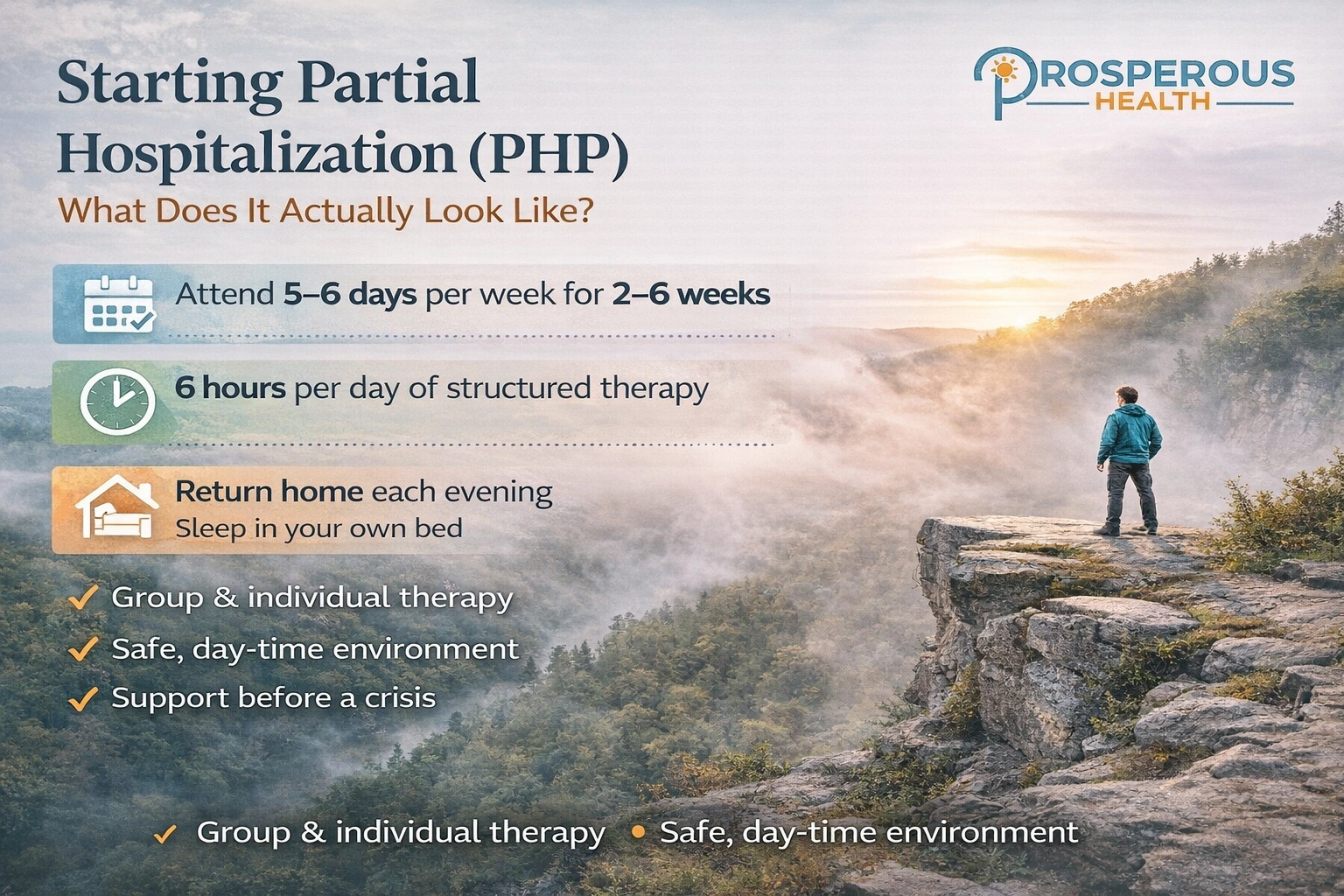
PHP is a day program—you attend during daytime hours, then return home (or to a safe living environment) each evening. It’s designed for people who need more support than weekly therapy offers, but don’t need the full intensity of inpatient or residential care.
You’re still in control of your life—but with the kind of daily therapeutic structure that can help stabilize what feels unmanageable right now.
Structure Doesn’t Mean Restriction—It Means Support
One of the biggest benefits of PHP is the predictable rhythm it brings.
Most programs run five to six days per week, averaging around six hours per day. And no, it’s not sitting in a circle talking about your feelings for hours. Your day includes:
- Group therapy sessions focused on practical skills, emotional regulation, and peer connection
- Individual therapy where you work through personal challenges and build insight
- Medication support, if needed and if you’re open to it
- Creative and movement-based therapies like art, yoga, or mindfulness practices
- Psychoeducation, which teaches you how to understand and manage your symptoms in the real world
This structure gives you space to slow down and feel without falling apart. To talk without being talked over. To be supported without being smothered.
You Don’t Have to Be in Crisis to Belong Here
One of the most common things we hear from first-time clients is this:
“I’m scared I’m not ‘bad enough’ to be here.”
Let’s get something straight: you don’t have to hit rock bottom to get help.
PHP is designed to keep people out of crisis by offering early, structured support. If you’re starting to feel emotionally unsafe, losing interest in life, or using substances just to get through the day—this is for you.
You might still be working or going to school. You might be functioning on paper. But if your internal world feels like it’s unraveling, you’re in the right place.
We’ve seen people walk into PHP afraid they wouldn’t belong—only to realize that everyone else was quietly carrying the same fears, just under different masks.
If you’re located near The Valley, California, you’ll find care in Addiction that’s designed for exactly this: early-stage support, before crisis takes hold.
PHP Isn’t Forever—It’s a Launchpad
A Partial Hospitalization Program is not meant to trap you in treatment forever. It’s designed to stabilize you and build real-world skills that you take with you when you leave.
For some, PHP is the beginning of recovery. For others, it’s a reset after a rough patch. Either way, the end goal is the same: to help you step back into your life with more clarity, more tools, and more self-trust than when you started.
Most people stay in PHP for 2–6 weeks. Some longer. Some less. It depends on your needs, your progress, and what support you’ll have once you transition out.
When you graduate, we don’t disappear. We help you build a sustainable aftercare plan—whether that’s stepping down to IOP (Intensive Outpatient), continuing therapy, or linking you with local community resources.
It’s Normal to Be Nervous. You’re Not Alone in That.
Starting something new—especially something as vulnerable as treatment—is scary. We won’t pretend it’s not. But here’s what we will tell you:
Every single person in our program has felt that fear. And every single one of them showed up anyway.
You’ll walk into a room where no one is expecting you to have it all figured out. No one is judging you for struggling. And no one is waiting for you to fall apart to finally take you seriously.
You’re allowed to be scared. You’re allowed to be unsure. You’re allowed to not know what healing looks like yet.
Our job is to meet you there—and help you figure it out together.
Your Story Is Worth Interrupting Early
Too often, people wait until they’re completely unraveling before reaching out.
But what if your pain is worth addressing before the ER visit? What if your mental health matters even when it’s not a full-blown emergency?
At Prosperous Health, we believe your pain is valid now. Not when you collapse. Not when someone else confirms it. But now—when you still have the clarity and courage to say: Something’s wrong. I need help.
That moment is enough. And it’s more than enough to begin.
If you’re based near Palos Verdes, California, our team offers regional support in Palos Verdes that’s built for first-time treatment seekers like you: no pressure, no shame, just next steps that make sense.
FAQ: What First-Time Treatment Seekers Ask About PHP
Do I have to talk in every group?
No. While participation is encouraged, we don’t force you to share before you’re ready. Many clients ease into group involvement over time.
What if I have to work or go to school?
Some clients are able to take a short leave. Others adjust schedules. If PHP isn’t a fit logistically, we’ll help explore lower-intensity options like IOP.
Is PHP just for people with addiction?
No. We treat individuals with depression, anxiety, trauma, OCD, eating disorders, and more. Substance use may be part of your story—or not. Either way, you’re welcome.
Will I have to take medication?
Only if you choose to. You’ll meet with a licensed prescriber who will offer options, not orders. We believe in collaborative care, not forced protocols.
What happens after PHP?
You’ll work with your team to create a personalized step-down plan—this might include therapy, IOP, alumni programming, or community-based support.
You Don’t Have to Navigate This Alone
Call (888) 308-4057 or visit our Partial Hospitalization Program in Orange County, California to learn more.
Even if you’re scared. Even if you’re unsure. You’re allowed to ask for help before everything falls apart. We’ll meet you where you are—and walk with you from there.