
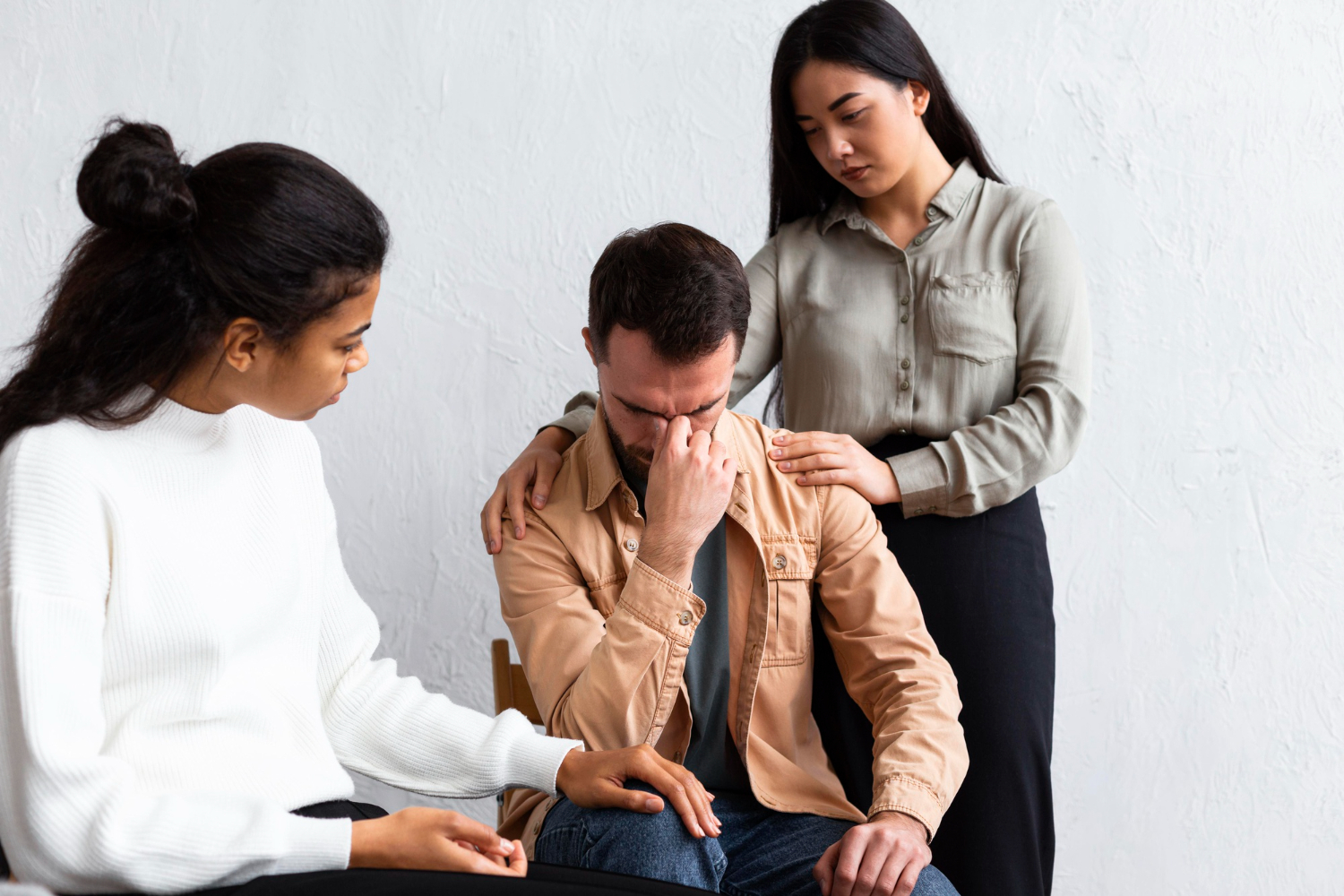
You’ve done this before—maybe more than once. The detox. The white-knuckling. The shaky week or two when you’re technically sober but feel nowhere near okay.
And then—relapse.
If you’re here now, looking for something different, it’s not because you failed. It’s because somewhere deep down, you still believe you’re worth saving. And maybe, you’re starting to realize that what you need isn’t another detox. It’s something deeper. Something steadier.
That’s where a Partial Hospitalization Program (PHP) comes in. Not to restart your story—but to change the way it unfolds from here.
Detox Can’t Teach You What PHP Does
Detox is necessary. It gets the alcohol or drugs out of your system, stabilizes your body, and keeps you safe in those high-risk hours or days when everything feels unmanageable.
But detox can’t:
- Help you untangle why you keep numbing.
- Teach you how to feel grief without running from it.
- Hold you through the shame spiral after a relapse.
- Rewire the habits that led to isolation.
- Rebuild trust—with others or with yourself.
That’s not a failure of detox. It’s just not what detox is designed to do.
PHP is.
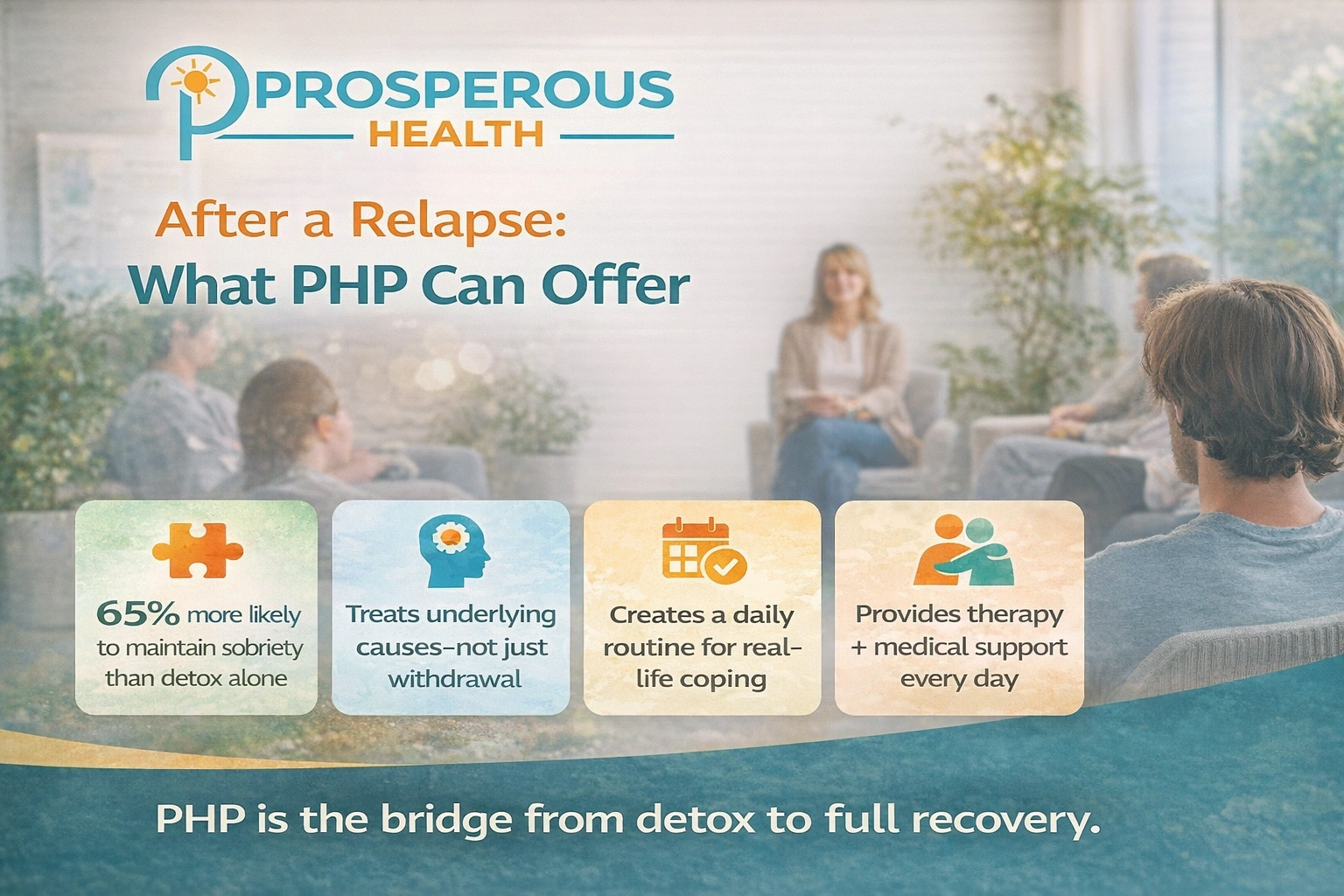
A Partial Hospitalization Program offers the structure of daily support with the flexibility to start living again. It’s the bridge between safety and autonomy. Between knowing what went wrong and actually doing something about it.
Why Detox Feels Like a Clean Slate—But Doesn’t Change the Script
We hear it all the time: “I got out of detox, and I was fine… until I wasn’t.”
It’s like a reset button—but the same triggers, thought patterns, and relational wounds are still sitting there, waiting.
If you don’t have somewhere safe and structured to land after detox, it’s incredibly easy to fall back into survival mode. Especially if you’re doing it alone.
In PHP, you don’t just talk about recovery—you practice it. Every day. With support. With peers who’ve been there. With clinicians who actually listen and adjust your care to fit who you are today—not who you were the first time you got sober.
After Relapse, the Shame Can Be Louder Than the Cravings
Let’s name it: coming back after a relapse feels brutal. Especially if you had 90 days. Or 200. Or more.
You know the lingo. You know the steps. You know what people say when someone “falls off.”
You don’t need lectures. You need someone who sees that relapse isn’t just a chemical slip. It’s a sign that something deeper went unaddressed.
In PHP, we don’t punish the pain. We stay with it. We help you unpack the moments before the moment. What happened when you started skipping therapy. Why you ghosted your sponsor. What that argument with your partner triggered in you.
Partial Hospitalization Programs are where the “why” gets unpacked—without judgment, without shame, and without pretending that a single decision defines you.
Structure Isn’t a Punishment—It’s a Lifeline
In early sobriety—or after relapse—structure can feel suffocating. But here’s the thing: the right kind of structure isn’t a cage. It’s scaffolding.
- Daily groups that keep you tethered to your values.
- One-on-one therapy that evolves with your needs.
- Time set aside for body-based healing, not just talk.
- Medication support if depression or anxiety is part of your relapse story.
- A schedule that gives your brain time to relearn safety, choice, and calm.
At Prosperous Health, our PHP doesn’t expect you to “bounce back.” We help you re-enter, steadily and with care. If you’re looking for support in Palos Verdes, our Irvine program holds space for real change—not just behavioral compliance.
You’re Not Starting Over. You’re Starting Differently.
That phrase—“starting over”—gets thrown around a lot in recovery.
But relapse doesn’t erase the work you did. It doesn’t make your sobriety before this meaningless. You still carry every insight, every painful growth moment, every relationship you tried to heal.
The difference now? You’ve seen what cracks when stress hits. You know what slipped through the cracks. PHP helps you seal those spaces—with boundaries, not fear.
This isn’t a reset. It’s a return—with better tools, deeper insight, and a more honest starting point.
If you’ve done detox and felt lost in the “what now,” our help in Addiction gives you a next step grounded in experience, not perfection.
This Time, You Get to Heal More Than Just the Withdrawal
A big reason alumni come back after relapse is because they realize: I never got to the root. They got sober. But they didn’t process the trauma. They didn’t name the loneliness. They didn’t have time—or space—to ask, What do I actually need from recovery?
Partial Hospitalization Programs are long enough to slow down the panic, and structured enough to prevent stagnation. You get to:
- Explore trauma with trauma-informed therapists
- Engage in groups that don’t just rehash 12-step clichés
- Build daily rhythms that feel like your life, not someone else’s script
- Learn real emotional regulation—not just distraction tactics
You deserve a recovery that’s deep enough to hold your pain—and strong enough to carry your joy.
FAQs: What Alumni Need to Know About PHP After Relapse
I already did PHP once. Will this be different?
Yes. You’re different now. Your needs have shifted. At Prosperous Health, we don’t recycle treatment plans—we customize them to who you are this time, not last time.
Do I need detox before PHP?
If you’ve used recently and there’s a risk of withdrawal, yes—detox might be recommended. But if you’re stable and sober enough to engage, PHP may be the next best step. We’ll assess this with you safely and respectfully.
I feel ashamed. Will I be treated like a failure?
Absolutely not. Relapse is part of many people’s path. Our team includes clinicians who have lived experience—and zero tolerance for shaming. You’ll be welcomed, not judged.
How long is the PHP program?
Most PHPs run five days a week, for 4–6 weeks. That said, your timeline is based on your progress and needs—not a one-size-fits-all model.
Can I work or go to school while in PHP?
Not typically. PHP is a full-time commitment—usually 5–6 hours a day. But it’s short-term, and it lays the foundation for long-term balance and independence.
If you’re ready to try again—this time with support that actually sticks—
Call (888) 308-4057 to learn more about our Partial Hospitalization Program in Orange County, CA.