

I didn’t lose my career.
I didn’t lose my house.
I didn’t lose my reputation.
What I lost was my ability to rest, to feel steady, to trust my own nervous system.
That’s what eventually led me to an outpatient detox program—not because everything collapsed, but because I could feel myself quietly slipping while holding everything together.
I Looked Fine. I Wasn’t.
From the outside, my life read like a checklist of stability.
Reliable job. Clean record. Bills paid. Calendar full.
Inside, it felt like living with a low-grade electrical hum that never shut off. I woke up already tense. I ended every day depleted. Alcohol wasn’t a party anymore—it was a pressure valve. Something I used to come down, even though it never really worked.
I told myself I was managing.
What I was actually doing was surviving on adrenaline and denial.
High-functioning addiction doesn’t look dramatic. It looks productive. And that’s what makes it dangerous.
The Lie of “At Least I’m Not That Bad”
I compared myself constantly.
I wasn’t missing work. I wasn’t driving drunk. I wasn’t blowing up relationships.
But I was planning my evenings around alcohol. I was irritable without it. I slept lightly, woke up anxious, and carried a constant undercurrent of dread that I couldn’t explain.
Here’s the truth no one talks about: you don’t need consequences to have a problem.
You just need suffering.
And I was suffering quietly.
The Cost of Holding It All Together
What alcohol really stole from me wasn’t my job or my family—it was my bandwidth.
I had less patience. Less creativity. Less emotional resilience. Everything felt harder than it needed to be.
I was “fine” in the same way a phone at 8% battery is fine—technically functioning, but one more demand away from shutting down.
The scariest part wasn’t losing control.
It was realizing how much effort it took to maintain the illusion of control.
Why I Considered an Outpatient Detox Program
When I finally started researching help, I knew one thing: disappearing into inpatient treatment wasn’t realistic for my life right now.
I needed something discreet. Structured. Medically sound.
That’s when an outpatient detox program made sense.
Outpatient detox allowed me to:
- Safely manage withdrawal with medical oversight
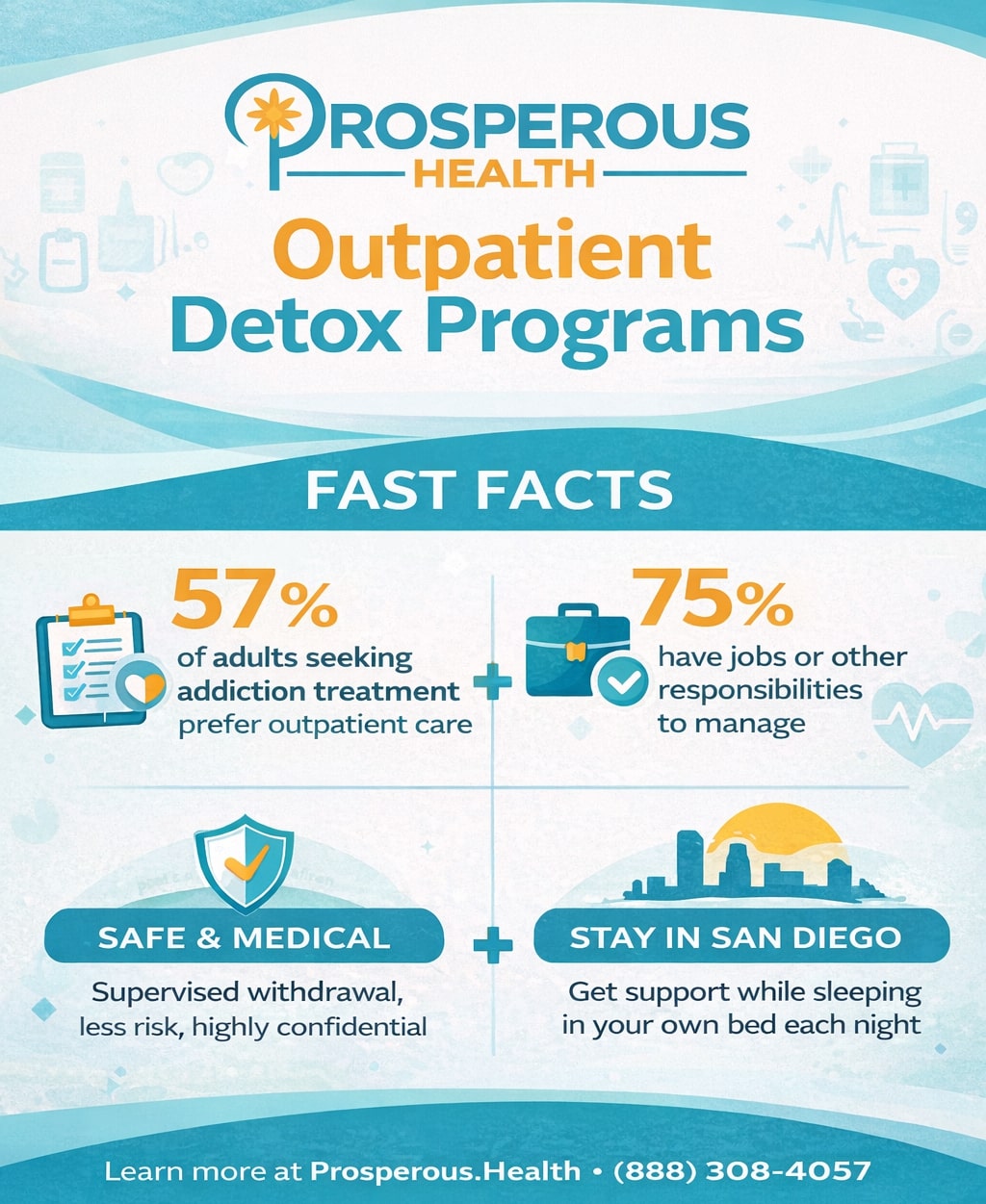
- Stay connected to my work and responsibilities
- Sleep at home instead of uprooting my entire life
- Address physical dependence without drama or exposure
This wasn’t about punishment or starting over.
It was about stabilizing my body so my mind could finally breathe.
The Fear of Being Seen (and the Relief of Not Being Judged)
I was terrified of being “found out.”
I imagined judgment. Labels. Questions I didn’t want to answer.
What I actually experienced was calm professionalism. Clear boundaries. No moralizing. No lectures.
I wasn’t treated like someone who failed.
I was treated like someone who noticed a problem early enough to do something about it.
That distinction matters—especially for people who are used to being competent everywhere else.
What Detox Gave Me That Willpower Never Did
I had tried cutting back on my own more times than I could count. It always failed the same way—anxiety, insomnia, irritability, and then relief the moment I drank again.
Outpatient detox helped me understand something crucial: this wasn’t a character issue. It was physical dependence.
Once my nervous system stabilized, things shifted quickly:
- My sleep deepened instead of fragmenting
- My anxiety dropped from constant to manageable
- My thinking cleared
- My emotional reactions softened
I didn’t become a new person.
I became the person I’d been propping up with alcohol.
This Isn’t About Rock Bottom — It’s About Capacity
A lot of people wait until their life is on fire to ask for help.
High-functioning people wait even longer—because the fire never quite starts.
Instead, everything slowly shrinks. Your tolerance for stress. Your patience. Your sense of ease.
An outpatient detox program isn’t for people who’ve “failed.”
It’s for people who are exhausted from pretending they’re fine.
If you’re looking for support in San Diego, there are treatment options that respect your privacy, your intelligence, and your responsibilities. Many people quietly explore care when they’re looking for outpatient detox program in San Diego, CA without ever needing to explain themselves publicly.
The Moment I Knew I’d Made the Right Choice
It wasn’t dramatic.
It was a Tuesday morning where I woke up without panic in my chest.
No bargaining. No mental math about when I could drink. Just space.
That’s when I realized how much of my energy had been going into maintenance mode. Recovery, for me, didn’t feel like restriction—it felt like relief.
Frequently Asked Questions About Outpatient Detox Programs
What is an outpatient detox program?
An outpatient detox program provides medical supervision for withdrawal symptoms while allowing you to live at home. You attend scheduled appointments, receive clinical monitoring, and get support without staying overnight in a facility.
It’s designed for people who need safety and structure—but not full residential care.
Is outpatient detox safe if I’m still working?
For many high-functioning professionals, yes.
Outpatient detox is often structured around your schedule and allows you to maintain work and family responsibilities while stabilizing physically.
A proper assessment determines whether outpatient care is appropriate based on your substance use, health history, and risk factors.
How long does outpatient detox usually last?
Most outpatient detox programs last several days to a couple of weeks, depending on the substance involved, level of dependence, and how your body responds.
The goal isn’t speed—it’s stabilization.
Will people find out I’m in detox?
Outpatient detox is discreet by design.
There’s no inpatient stay, no visible absence from your life, and strict confidentiality protections.
Many people complete outpatient detox without anyone outside their immediate support circle knowing.
Does choosing outpatient detox mean I’m “not that bad”?
It means your needs match the level of care.
Treatment isn’t about severity—it’s about fit.
Outpatient detox is often chosen by people who recognize dependence early and want to intervene before things escalate.
What happens after detox?
Detox addresses the physical side of dependence—but ongoing support is what protects your progress.
Many people transition into outpatient therapy, recovery support, or structured aftercare to maintain stability and prevent relapse.
You Don’t Have to Burn Your Life Down to Save It
If this story feels uncomfortably familiar, that’s not coincidence—it’s recognition.
You can keep your job.
You can keep your home.
You can keep your reputation.
And you can still choose help.
Call (888) 308-4057 or visit to learn more about our outpatient detox program services in San Diego, CA.