

If you’re a parent, you may feel like you’ve already been through it all. The ups, the relapses, the promises, the fear that your 20-year-old is slipping again. You’re tired of guesswork. You want to know what treatment really looks like this time. Not the glossy brochure version—the real, everyday reality.
Here’s the good news: a Partial Hospitalization Program (PHP) isn’t a black box. It’s structured, supportive, and practical. It’s therapy, it’s groups, it’s learning how to live without drugs or alcohol—and it’s designed for people who need more than weekly sessions but don’t need overnight hospitalization.
Let’s walk through what actually happens in PHP so you can see how it might help your loved one.
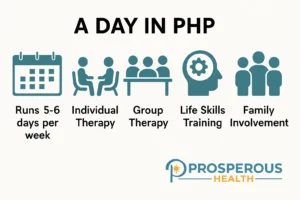
A Day in PHP: Structure Without Lockdown
A PHP runs during the day, usually five to six days a week. Think of it like a school day for recovery. Your son or daughter spends the day in treatment, then comes home in the evening.
This means they get the intensity and consistency of care, but also practice real-life skills at home. It’s treatment woven into daily living—not a bubble removed from the world.
Individual Therapy: The One-on-One Work
Every PHP includes individual sessions with a therapist. This is where the deep, personal work happens. Trauma, stress, shame, anxiety—whatever fuels your child’s substance use, this is the place it’s addressed.
Therapists use evidence-based approaches like CBT (Cognitive Behavioral Therapy), DBT (Dialectical Behavior Therapy), or trauma-informed care. The goal isn’t just talking—it’s giving your child practical tools they can use in the moment.
Over time, these sessions help your young adult understand the “why” behind their use and develop healthier strategies for coping with life’s challenges.
Group Therapy: Connection and Belonging
If your 20-year-old feels alone in their struggle, group therapy is often the antidote. Sitting in a circle with peers who are walking through the same challenges is powerful. They hear, “me too” instead of “what’s wrong with you?”
Groups focus on coping strategies, relapse prevention, communication skills, and real conversations about recovery. They’re structured, guided by clinicians, but open enough to let real friendships and support form. For many young adults, groups are the first time they feel less like “the problem” and more like part of a community.
Life Skills Training: Preparing for the Real World
Recovery isn’t just about not using—it’s about building a life that makes staying sober possible. PHPs focus on real-life skills:
- Managing stress without substances
- Building healthy routines
- Setting boundaries in relationships
- Planning meals, sleep, and schedules
- Returning to work or school gradually
These may seem basic, but for someone who’s been stuck in addiction, learning (or re-learning) these skills can be the foundation for long-term stability.
Medical and Psychiatric Support: Healing the Whole Person
PHPs are staffed with medical and psychiatric professionals. If your young adult needs medication for anxiety, depression, or withdrawal management, that care is built in.
This matters because substance use and mental health often go hand-in-hand. Treating both means fewer cracks for relapse to slip through. With integrated support, your child isn’t just sober—they’re healthier in mind and body.
Family Involvement: You’re Part of the Process
As a parent, you may feel helpless, but you’re not sidelined. Many PHPs include family therapy sessions or education groups. These give you tools to communicate better, set healthy boundaries, and rebuild trust.
It’s not about blaming parents. It’s about equipping the whole family to heal together. Because recovery doesn’t happen in isolation—it happens in relationships.
Why This Level of Care Matters
If weekly therapy hasn’t been enough, but inpatient treatment feels too extreme, PHP is often the sweet spot. It’s intensive without being isolating. Structured without being restrictive.
For young adults, this balance often makes treatment feel more doable. They’re not “locked away,” but they’re not left to figure it out on their own either.
Location Options for Care
If you’re looking for a Partial Hospitalization Program in San Diego, CA, Prosperous Health offers programs tailored for young adults and families. For parents in other areas, there are also programs in The Valley, CA and Palos Verdes, CA.
Wherever you are, the heartbeat of PHP is the same: intensive treatment combined with real-life practice.
A Metaphor to Hold On To
Think of PHP like training wheels. It gives your young adult the structure they need while letting them practice balance in real life. Eventually, the training wheels come off, but the confidence they build while using them makes the ride possible.
FAQs About PHP for Parents
How long does a PHP usually last?
Most programs run four to six weeks, depending on individual progress. Some young adults may need more time, and others may transition to a lower level of care sooner.
Can my child still work or attend school during PHP?
Often, yes. Many PHPs are structured to allow young adults to begin reintegrating into daily life while still receiving support. The balance of treatment and real-life practice is intentional.
How is PHP different from inpatient rehab?
Inpatient rehab requires 24/7 residence at a facility. PHP provides daytime treatment with the ability to return home in the evenings. It offers intensive care while encouraging real-world application.
Will I be involved in my child’s treatment?
Yes. Family involvement is encouraged. You may participate in family therapy sessions, parent education, or support groups that help you learn how to best support your child.
What if my child resists going to PHP?
Resistance is common. Addiction can make treatment feel threatening. Clinicians can help guide these conversations, emphasizing that PHP isn’t punishment—it’s support. Often, young adults warm up to the idea once they experience the community inside.
Final Word: You’re Not Alone
Watching your child use again can feel like drowning in fear. But there is a path forward, one that blends therapy, community, and practical skills into something your young adult can actually use. A Partial Hospitalization Program offers more than hope—it offers structure, tools, and connection at the exact level many families need.
Call (888)308-4057 or visit Partial Hospitalization Program in San Diego, CA to learn more about how PHP can support your family and help your child take the next step toward recovery.