

I didn’t walk into alcohol addiction treatment believing it would save me. I wasn’t full of courage or clarity. I wasn’t ready to change my life. I was just tired.
Not the kind of tired that sleep fixes. The kind that seeps into your bones. The kind that makes everything feel heavy—getting dressed, answering texts, brushing your teeth. Life had become something I endured, not something I lived. And alcohol, for a while, had been the only thing that dulled the ache.
But over time, even that stopped working. I wasn’t drinking to escape anymore. I was drinking to function—barely.
And when that stopped working too, I ended up in treatment. Not because I had hope, but because I had nothing left.
Exhaustion Was My Rock Bottom
There were no flashing lights. No big intervention. Just a quiet moment when I realized I couldn’t fake it anymore.
I’d tried everything to convince myself I didn’t need help. I had a job. I paid rent. I showed up. Sort of. And that was supposed to mean I was “fine.”
But inside, I felt like I was unraveling.
I wasn’t thinking about recovery. I was thinking about relief. I didn’t believe treatment would work—I just knew I couldn’t keep living like this.
So I packed a bag and showed up. Not brave. Not certain. Just empty.
And that was enough.
Treatment Didn’t Ask Me to Be Okay
One of the biggest surprises in treatment? No one expected me to be anything other than what I was.
I didn’t have to smile. I didn’t have to make sense. I didn’t even have to talk much those first few days.
There was a kind of quiet grace in how the staff approached me. Like they knew the shape of my pain already. Like they didn’t need me to prove I belonged there.
I remember sitting in a group session the first week, saying almost nothing. Just listening. Watching other people tell the truth out loud and not fall apart. It was strange and tender and uncomfortable.
But it made something inside me soften, just a little.
I Wasn’t Hopeful—But They Were
Hope didn’t come from inside me at first. It came from how others treated me.
From the tech who asked if I wanted coffee in the morning, even after I’d snapped at him the day before. From the therapist who said, “It’s okay if today’s just about showing up.” From the other client who passed me a tissue without making a big deal of it.
They didn’t try to fix me. They didn’t drown me in positivity. They just made space for me.
In those early days, that meant everything. Not being pressured to transform. Just being allowed to exist in my brokenness, and still be worthy of care.
That kind of steady presence started to stitch a little bit of belief back into me. Not belief that I’d be amazing or even happy. Just belief that I might not have to stay this tired forever.
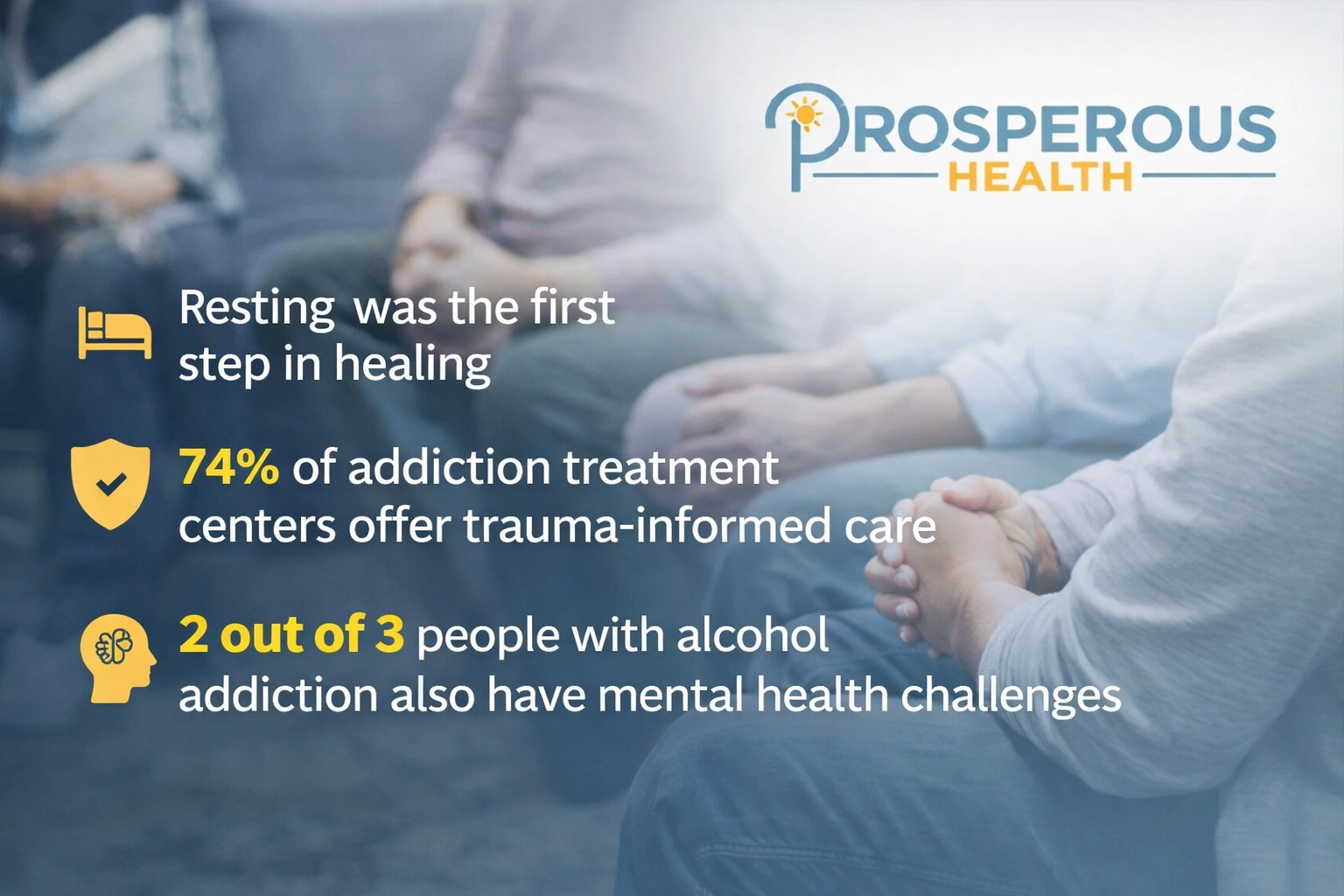
The First Win Was Rest
Before I could rebuild anything, I needed rest.
Not just physical rest—though I slept more in those first two weeks than I had in months. I needed nervous system rest. Emotional rest. The kind of rest that comes when you don’t have to pretend.
That’s what alcohol addiction treatment gave me first. A place where I didn’t have to perform. Where I didn’t have to lie to make others comfortable. Where I could just be exhausted and messy and confused—and still be held.
Eventually, that rest became the foundation for healing. But for a while, it was the only thing I could hold onto. And it was enough.
I Started to Want Tiny Things Again
Healing didn’t arrive with fireworks. It came in tiny, almost unnoticeable shifts.
One morning, I looked forward to breakfast. Another day, I caught myself laughing at a group joke. I started remembering people’s names. I wrote a full journal entry instead of just a sentence.
Little things. But they were signs of life. Signs that something inside me was stirring.
I wasn’t chasing a big transformation. I was just starting to feel like a person again.
That mattered more than any milestone or sobriety chip.
I Let Go of the Story That I Had to Be Fixed
One of the hardest things to unlearn was the idea that I was broken and needed to be fixed.
Alcohol had been my coping mechanism, not my identity. My exhaustion wasn’t weakness. It was a signal that something needed to change.
Treatment helped me reframe what healing could look like. Not a straight line. Not a single moment of breakthrough. But a slow return to myself—my body, my breath, my feelings.
In that return, I found something quieter than hope. I found willingness.
Willingness to keep showing up. To try again. To rest when I needed to. To ask for help. To start living from the inside out instead of the outside in.
That’s what recovery became for me.
A Quiet Place to Begin Again
I’ve seen a lot of portrayals of treatment that make it look intense or overwhelming. And sure, there were moments that were hard.
But what I remember most clearly is the gentleness.
The calm voices. The soft blankets. The group check-ins that didn’t demand anything more than “How are you really?” The meals that felt like reset buttons.
Prosperous Health wasn’t just a place to get sober. It was a place to exhale. A place where rest was respected. Where stillness wasn’t treated as laziness—it was honored as part of the process.
If that’s what you’re craving—space to breathe, space to stop pretending—there’s room for you.
And if you’re somewhere near The Valley, California, know that help is closer than you think.
You Don’t Have to Earn Care
If you’re wondering whether you’re “sick enough” to need help, I want to gently offer this: you don’t have to be falling apart to deserve support. You just have to be tired of holding it all alone.
You don’t have to wait until your life explodes. You don’t have to prove your pain. You don’t need to find the perfect words.
You’re allowed to walk into a treatment center completely worn out, with no plan, no confidence, no idea how to fix anything.
You’re allowed to whisper, “I can’t do this anymore.”
And that can be enough to begin.
For those near Palos Verdes, California, compassionate care is available without pressure, without judgment—just presence, support, and the kind of rest that begins to restore what burnout erased.
FAQ: Alcohol Addiction Treatment When You’re Burned Out
What if I don’t feel ready for treatment?
You don’t have to feel ready. Many people enter treatment unsure, scared, or numb. Readiness often comes later—after rest, connection, and support. Willingness to try is enough to begin.
Can I go to treatment even if I’m still functioning?
Yes. “High-functioning” alcohol use can be just as harmful. If you’re drinking to cope, feel emotionally drained, or are afraid to stop—treatment can help before things escalate.
What happens in the first few days of treatment?
Typically, you’ll meet your care team, settle in, and begin slowly. Most programs offer space to decompress before jumping into groups or therapy. You’re not expected to perform—just show up.
Will people judge me for being exhausted?
Not at all. Exhaustion is often the reason people seek help. Compassionate programs like Prosperous Health recognize that burnout is real—and treat it with care, not criticism.
What if I’ve tried treatment before and it didn’t work?
That doesn’t mean you failed—or that all treatment is the same. Your needs may be different now. The right setting, team, and pace can make all the difference.
Ready to Take a Breath?
Call (888) 308-4057 or visit our Alcohol Addiction Treatment in Orange County, California to learn more.
You don’t need to feel hopeful to start. You just need a place where it’s safe to rest. We’re here when you’re ready.