

You don’t need to be holding a bottle, a needle, or a phone full of shady contacts to be on the edge of relapse. Sometimes, relapse doesn’t look like using—it looks like hiding. It looks like old habits slipping back in when no one’s watching. It looks like thinking, “I’m fine,” when you know you’re not.
If you’ve dropped out of treatment or ghosted your Intensive Outpatient Program (IOP), it’s easy to convince yourself you’re still holding it together. But when you’re in that fragile space between white-knuckling and breaking, the warning signs of relapse often start quietly—and they’re easier to miss when you’re flying solo.
At Prosperous Health, we know this place. And more importantly, we know how to walk you back from it. Our IOP in San Diego is here when you’re ready—not to judge your drop-off, but to catch your comeback.
Relapse Isn’t Just the Moment You Use
Relapse is a process, not a single event. And for many people, especially those who’ve disengaged from treatment, the first signs start long before a drink, a pill, or a call to the old dealer.
Think of relapse like erosion. You don’t notice the cliffs falling until the edge gives out under you. But the cracks were there—stress building, routines falling apart, connections fading. You feel off, but you don’t know why. Then comes the rationalization. Then the isolation. Then the old voice whispering, “One won’t hurt.”
If you can spot the signs early, you can stop the slide.
6 Relapse Warning Signs You Might Be Missing
These signs don’t always scream. Sometimes they whisper. But if you notice more than one, it’s time to reconnect—before things crash.
1. You’re Isolating—And Justifying It
You stop replying to texts. You dodge calls from sober friends or former group members. You convince yourself you’re just “recharging,” but deep down, you’re disappearing.
Isolation is one of the most consistent precursors to relapse. Humans recover better together. When you pull away from your support system, it’s not rest—it’s retreat.
2. You’ve Slipped Into “Functional Numb”
You’re not actively using, but you’re not living either. You skip meals. You stay in bed late or work 12-hour days to avoid thinking. You stopped journaling, stopped caring, stopped checking in.
This is emotional relapse: a stage where your brain starts to shut off the warning lights in favor of autopilot. You’re not in crisis yet—but you’re coasting toward it.
3. You Romanticize the Old Days
Suddenly, the part of your brain that remembers the chaos of addiction goes quiet. Instead, it starts playing highlight reels: parties, confidence, calm, control. You forget how bad it got. You convince yourself you could probably handle it this time.
That mental movie is a lie. But it’s a seductive one—and it plays loud when you’re disconnected from treatment.
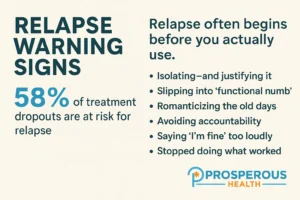
4. You’re Avoiding Accountability
You skipped your last therapy session. You told your sponsor you were busy. You stopped updating your recovery tracker. You haven’t looked at your care plan in weeks.
Avoidance is a huge red flag. The part of you that knows you’re slipping will do everything it can to avoid being caught. But you don’t need to be caught—you need to be supported.
5. You’re Saying “I’m Fine” Too Loudly
You start overcompensating. “I’m doing great.” “Everything’s fine.” “I’ve got this.”
Translation: “I’m falling apart and too scared to say so.”
When everything’s fine, you don’t need to announce it. When you do—it’s often because you’re trying to convince yourself.
6. You’ve Stopped Doing What Worked
No more meditation. No more grounding exercises. No more group chats. No more walks or books or breathwork. You’re back to running on fumes, doing just enough to survive—but not enough to sustain.
This isn’t laziness. It’s a system under strain. But dropping the tools is often a precursor to dropping the ball.
Why Treatment Dropouts Are at Higher Risk for Relapse
Leaving an IOP isn’t a moral failure—it’s often a logistical one. You had to work. You got overwhelmed. Life didn’t stop just because you were in recovery.
But when treatment ends prematurely, something critical is often missing: the relapse prevention foundation.
Without that structure—without weekly check-ins, group validation, and coping tools—it’s easier for old pathways to reopen. Your brain remembers the old ways of coping. And without a plan to interrupt those patterns, they sneak back in quietly.
At Prosperous Health, we expect people to leave and return. It’s not a red flag. It’s the rhythm of healing. What matters is that you notice the shift before it turns into something harder to come back from.
What To Do When You Spot the Signs
1. Pause. Name What’s Happening.
Literally say it out loud, or write it down. “I think I’m slipping.” “This feels like the beginning of a relapse.” Naming it breaks the denial cycle.
2. Reach Out to One Person.
You don’t need to rejoin a group today or dive into therapy. Just tell one person—a peer, a friend, a mentor. “I’m scared I’m slipping. Can we talk?”
If you’re in San Diego, you can also call us at Prosperous Health and say, “I was in IOP. I left. But I’m noticing signs and I don’t want to relapse.”
We’ll meet you exactly where you are.
3. Reconnect to Your Tools—Even One.
Pick one thing that used to help. A breathing exercise. A journaling habit. A 10-minute walk. Do it again. Small wins matter.
4. Schedule a Check-In (Not a Comeback).
If IOP feels too big, start with one call. One appointment. One conversation. Let us help you decide what’s next—without pressure or shame.
What Returning to IOP Might Look Like
You don’t have to start from scratch. Returning after dropout is different. You bring self-awareness, lived insight, and a deeper need to do it differently this time.
At our Intensive Outpatient Program in San Diego, here’s what reentry often includes:
- Updated treatment plan: Adjusted hours, new therapist, better fit
- Flexible scheduling: Morning, evening, or virtual groups
- Peer validation: Real conversations with others who left and came back
- Trauma-informed re-onboarding: No lectures. No shame. Just support.
If you’re in the region, we also serve clients through Palos Verdes and The Valley—with the same compassionate approach.
FAQs: Relapse Signs & IOP Reentry
Q: How do I know if I’m really relapsing or just struggling?
Relapse signs often mimic stress or burnout. But if you’re consistently isolating, avoiding, or romanticizing the past—it’s worth paying attention. You don’t need to wait for a “rock bottom” to seek support.
Q: Will I be judged for dropping out and returning?
Not here. We know dropout happens. Life happens. Your willingness to come back speaks more than your absence ever could.
Q: Can I do IOP differently this time?
Yes. That’s the point. Let us know what didn’t work. We’ll build something that fits your current capacity—not a one-size-fits-all plan.
Q: What if I already relapsed—am I too late?
No. Never. Whether it was one time or a full slide, you can return. You don’t need to spiral further to “deserve” help again.
Q: I’m scared I’ll leave again. Can we build a plan to prevent that?
Absolutely. Together, we’ll map out flags, supports, and structures to keep you engaged without overwhelm.
Spotting the Signs Means You’re Still in the Fight
Noticing that you’re slipping is a sign of strength, not failure. It means you’re still connected to your own care. It means the part of you that wants to heal is still in the room.
You don’t have to white-knuckle this. You don’t have to earn your place back. You just have to say, “I’m ready to come back differently.”
Let’s start with that.
Ready to talk? Call (888) 308-4057 or visit Intensive Outpatient Program services in San Diego, CA to learn more about how to recognize relapse signs early—and return to care before the fall. You don’t have to crash to be worthy of help. You just have to reach out.