

You Don’t Have to Have It All Figured Out—Just the Right Questions
Receiving an opioid addiction diagnosis can feel like your world shifted underneath you. Whether it was expected or came as a surprise, now you face tough decisions: Do you start treatment? Can you trust it? Will it change who you are?
The journey begins with understanding—not with knowing. Before choosing a program, take a moment to reflect on these six essential questions. They won’t all have clear answers right away, but they can help you move forward with awareness and intention.
1. What Am I Most Worried About?
Fear is often the first barrier to seeking help. You might be afraid of withdrawal, judgment, medication, failure—or even that treatment will take something important away from you.
Being honest about what scares you gives your counselor a chance to address it directly. Do you need reassurance on how medications work? A clear withdrawal plan? Honor your worries—they are signals guiding your next move.
2. What Does “Healing” Look Like to Me?
People often default to “stopping all use” as the sole definition of recovery. But real healing is richer than clean urine. What does a good life look like in your eyes?
Maybe it’s being able to wake up, go to work, and enjoy dinner with your family. Maybe it’s stopping the cycles of shame and regret that follow each relapse. Maybe it’s sleeping through the night.
Take time to define what matters most—and let that shape your path forward.
3. How Do I Feel About Medication?
It’s common to have mixed feelings about medication-assisted treatment (MAT). You might worry it undermines your strength or makes you dependent on another drug.
The truth is, medications like buprenorphine and methadone don’t make you high—they help stabilize your system so you can heal your life. It’s okay to be unsure. Start with these questions:
- What information do I need to feel safe?
- What stories or beliefs have shaped my view of medication?
- What options am I curious about exploring?
At Prosperous Health, we respect any decision—whether you choose medication immediately or take more time to learn.
4. Who Is on My Support Team (and Who Isn’t)?
Treatment isn’t a solo mission. Your support system makes a world of difference. Who in your life can you talk to openly? Who can hold space without judgment? Who might drain your energy or trigger you?
It’s perfectly okay to be protective of your circle right now. You don’t have to broadcast your diagnosis. Instead, consider:
- One trusted friend or family member you can count on
- Allies who encourage self-care and healthy habits
- People who will respect your boundaries and recovery timeline
Identifying key allies now lays the groundwork for long-term healing.
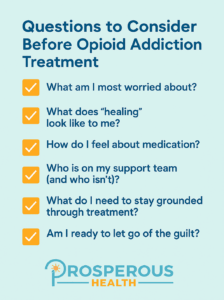
5. What Do I Need to Stay Grounded Through Treatment?
Starting treatment can feel like stepping off a cliff. You still need to work, parent, study, and pay bills. Anxiety about “falling behind” is real and well-founded.
Here’s what you might need to feel stable:
- Flexible appointment times or telehealth check-ins
- Transportation, childcare, or job support
- Mental health care for underlying anxiety or depression
- A daily routine that keeps your life balanced
Let your treatment provider know what matters to you. Support isn’t about convenience—it’s about sustainability.
6. Am I Ready to Let Go of the Guilt?
Addiction carries a powerful load of shame and self-blame. But guilt doesn’t help you—healing does.
Before stepping into treatment, ask yourself:
- What guilt am I still carrying?
- What would it look like to be kinder to myself?
- How would it feel to trade silence for help?
This isn’t easy. But forgiveness isn’t optional—it’s foundational. You’ve already fought this battle. Now allow yourself to heal.
The Next Step Isn’t Perfection—It’s Possibility
These six questions won’t make treatment easy. But they will make it intentional.
At Prosperous Health in Southern California, we help you answer them, not rush past them. Our approach to Opiate Addiction Treatment in California is built to meet both your mind and your life: from medication and therapy to peer support and practical case management.
Healing starts here—not with a crash course but with a first step you feel ready to take.
Frequently Asked Questions
Q: Do I have to choose medication right away?
A: No. MAT is powerful, but only if you feel safe using it. We offer time, education, and compassion—no pressure.
Q: What if I don’t have anyone to support me?
A: You’re not alone. We connect many clients with peer mentors, group support, and community resources to build a new support system.
Q: How long is treatment?
A: It depends. Many find months of consistent care helpful, with gradual transition to outpatient and aftercare support tailored to your progress.
Q: Will treatment affect my job or family life?
A: We design flexible treatment options so you can keep your responsibilities while healing. Just let us know what matters to you, and we’ll work around it.
Q: What if I relapse during treatment?
A: Relapse isn’t failure—it’s a sign to recalibrate. If you slip, we adjust the plan—without judgment, without ending your care.
Healing Is Waiting—Whenever You Are Ready
You don’t have to be perfect. You just have to care enough to ask the right questions—and you’ve already begun. That willingness is hope whispering: there’s something better.
Call (888) 308‑4057 or visit our opioid addiction treatment page. We’ll answer your questions. We’ll tailor your plan. We’ll walk with you—one first step at a time.