

I didn’t think I needed rehab.
I had a job people respected. I hit deadlines. I answered emails at 6 a.m. I paid my bills on time. From the outside, I looked disciplined.
Inside, I was negotiating with a bottle every night.
If you’re high-functioning, you know exactly what I mean. You’re not “falling apart.” You’re just tired. Managing. Hiding. Calculating.
When someone first mentioned an outpatient detox program, I almost laughed. Detox sounded dramatic. I wasn’t dramatic. I was responsible.
But what I wanted wasn’t rehab.
I wanted control.
And I didn’t realize until later that those two things weren’t opposites.
I Was Managing Everything Except the One Thing That Mattered
My calendar was color-coded. My work performance was strong. I kept up appearances effortlessly.
What I couldn’t manage was the creeping escalation.
One drink became three. Three became “just tonight.” “Just tonight” became every night.
I told myself I wasn’t addicted because I never missed work.
But I was:
- Waking up with a racing heart
- Timing my day around when I could use
- Promising I’d cut back tomorrow
- Breaking that promise before dinner
High-functioning addiction is subtle. It hides behind competence.
And competence makes it easy to delay help.
I Didn’t Want to Lose My Life to Get It Back
The word “rehab” felt like exile.
I pictured:
- Disappearing from my job
- Telling colleagues I’d be gone
- Losing control of my schedule
- Handing over my phone
It felt like surrender.
And if you’re someone who prides yourself on control, surrender feels like humiliation.
So I didn’t reach out for a long time.
I tried moderating. Tracking. Rules. Dry months. All the usual high-functioning strategies.
I failed quietly.
Over and over.
The Moment I Knew It Was Bigger Than Willpower
The turning point wasn’t a dramatic rock bottom.
It was a Tuesday.
I had a meeting at 9 a.m., and my hands were slightly shaking. Not enough for anyone else to notice. Enough for me to notice.
I realized I wasn’t using to celebrate. I wasn’t even using to relax.
I was using to feel normal.
That scared me.
Because if I needed a substance to feel baseline, that wasn’t control.
That was dependence.
Choosing a Middle Ground
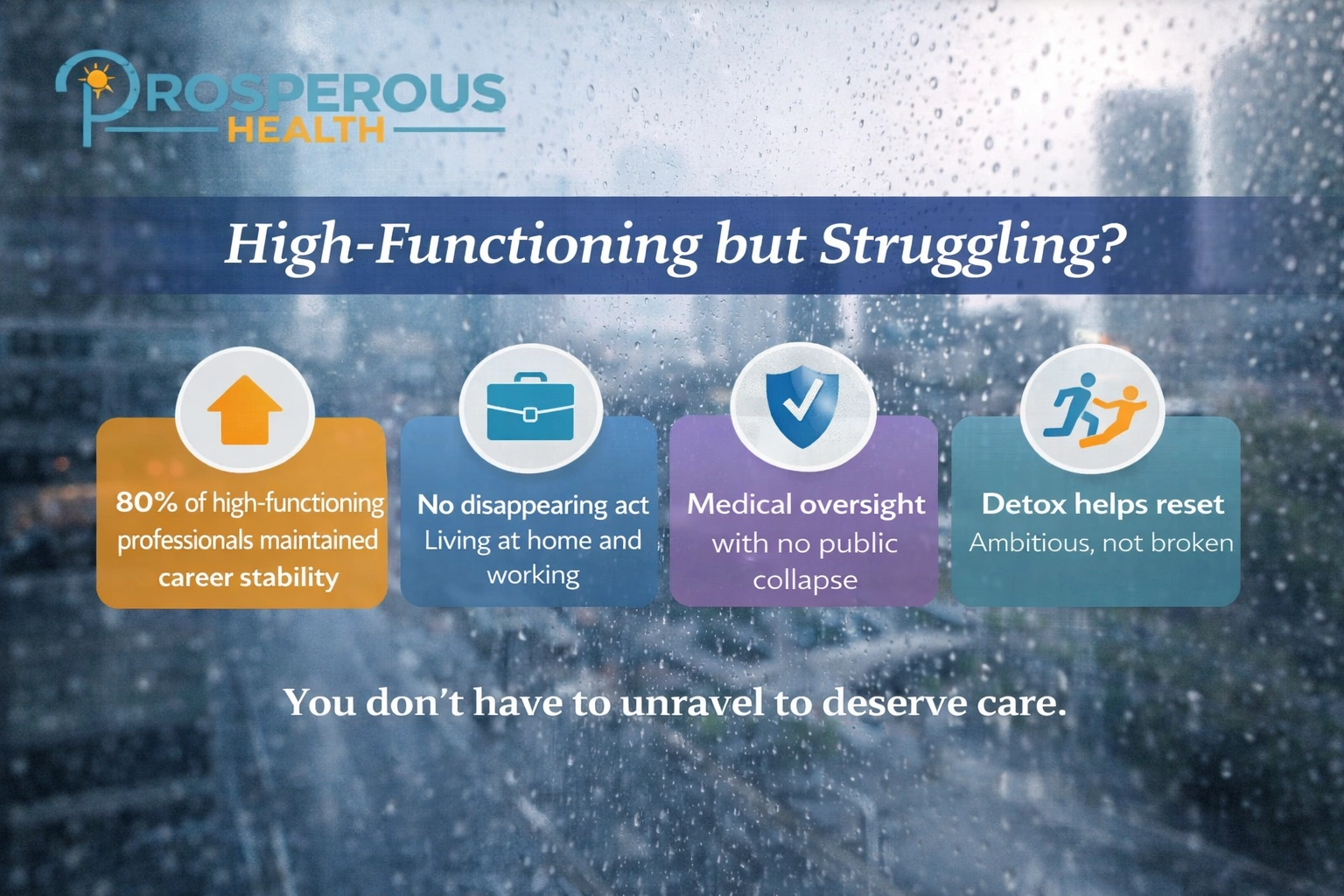
When someone explained that I could detox with medical oversight while still living at home, something shifted.
I didn’t have to vanish.
I didn’t have to torch my career.
I didn’t have to explain everything to everyone.
I could stabilize safely — without detonating my life.
The idea of an outpatient detox program felt like a compromise my pride could tolerate.
And sometimes, that’s enough to start.
The First Honest Conversation
Calling was uncomfortable.
I expected judgment. Maybe a lecture.
Instead, I got calm questions:
- What have you been using?
- How often?
- When was your last use?
- Have you ever experienced withdrawal symptoms?
No one sounded shocked. No one sounded disappointed.
They sounded focused on safety.
That was new for me.
I was used to focusing on image. They were focused on health.
Detox Wasn’t Dramatic — It Was Structured
Let me be clear.
It wasn’t effortless.
The first few days were uncomfortable. My body had adapted to regular use. Of course it had. That’s how physiology works.
But I wasn’t white-knuckling it alone.
There were check-ins. Medication support when appropriate. Clear expectations about what I might feel and when.
For the first time, I wasn’t guessing if what I was experiencing was normal.
Structure replaced panic.
And structure is something high-functioning people understand.
I Kept My Routine — But Lost the Secret
One of the biggest fears I had was losing control of my daily life.
Instead, I kept it.
I still went to work.
I still handled responsibilities.
I still lived in my own space.
The difference?
I wasn’t secretly calculating when I could drink.
I wasn’t checking the clock during conversations.
I wasn’t making mental promises I’d break by sunset.
The chaos wasn’t visible before. But it was constant.
When it quieted, I realized how much energy I had been burning just to appear fine.
High-Functioning Doesn’t Mean High-Wellbeing
Here’s the lie I told myself:
“As long as I’m performing, I’m okay.”
Performance isn’t health.
I was productive. I was respected. I was also anxious, exhausted, and quietly ashamed.
High-functioning addiction often looks like:
- Promotions
- Packed schedules
- Clean homes
- Smiles in public
But inside, there’s:
- Fear of being found out
- Emotional numbing
- Physical withdrawal between uses
- A shrinking world that revolves around substances
You don’t have to crash to qualify for help.
Sometimes the slow erosion is worse.
Detox Gave Me Something I Didn’t Expect
Clarity.
After my body stabilized, my thinking changed.
Not magically. Not overnight. But gradually.
I could sit through a meeting without distraction. I could fall asleep without negotiating. I could wake up without dread.
It wasn’t euphoria.
It was stability.
And stability felt powerful.
If you’re looking for care in California, there are options that don’t require you to abandon your life — including support in The Valley, California.
You can get medical support without public collapse.
What Happened After Detox
Detox wasn’t the end of the story.
It was the reset.
Once my body wasn’t in withdrawal, I could actually evaluate what I needed next.
Therapy. Structured support. Conversations about stress and perfectionism and why I needed to numb in the first place.
Detox addressed the physical dependence.
The next steps addressed the patterns.
But I couldn’t have done the deeper work while my body was screaming for relief.
Stabilization came first.
The Control I Thought I Wanted vs. The Control I Found
I thought control meant:
- Drinking only on weekends
- Setting limits
- Stopping at two
- “Managing” it
Real control turned out to be:
- Not bargaining with myself
- Not hiding
- Not structuring my life around access
- Trusting my own decisions again
That didn’t come from willpower.
It came from medical stabilization and support.
I didn’t lose control by seeking help.
I regained it.
Frequently Asked Questions
Can you really detox safely without going to residential?
For many people, yes — especially with proper medical assessment and monitoring. Safety depends on what you’ve been using, how much, and your overall health. That’s why a clinical evaluation is the first step.
What if I’m high-functioning and no one knows I have a problem?
You don’t have to publicly unravel to get help. Many high-functioning professionals seek medical detox privately while maintaining work and responsibilities.
Will people find out?
Confidentiality is protected. You can discuss concerns about privacy during intake. Many people continue working without colleagues knowing the details of their medical care.
What if I try detox and relapse later?
Relapse doesn’t erase the value of detox. Stabilization reduces risk and creates clarity. If relapse happens, you reassess and adjust. It’s part of the process for many people.
Does choosing outpatient mean I’m not taking it seriously?
No. It means you’re choosing a level of care that aligns with your current readiness and responsibilities. Seriousness is about honesty and follow-through — not intensity alone.
What if I’m scared I won’t follow through?
Fear of inconsistency is common. Structure helps. Medical monitoring, scheduled check-ins, and clear plans reduce the pressure to rely on willpower alone.
If you’re reading this and thinking, “I don’t want rehab — I just want control,” I understand.
You don’t have to blow up your life to stabilize your body.
You don’t have to hit bottom to deserve support.
You can choose a middle path.
Call (888)308-4057 to learn more about our outpatient detox program services in California.