

Maybe you left treatment early.
Maybe you stopped answering calls.
Maybe you said you’d come back Monday… and then didn’t.
If that’s you, I want to speak to you directly.
You are not banned.
You are not a failure.
You are not “too much.”
You might just not have been ready for residential care.
And that’s more common than you think.
If you’re looking at options like an outpatient detox program, it doesn’t mean you’re restarting from zero. It means you’re trying to find a version of support that actually fits your life right now.
Let’s walk through how this can work — especially if you ghosted before.
Step 1: Reaching Back Out (Yes, Even If It’s Awkward)
The hardest part for most people isn’t withdrawal.
It’s the phone call.
You might imagine someone saying:
“Why did you leave?”
“You wasted our time.”
“You should’ve stayed.”
That’s not how this works.
When you call, the focus isn’t on what happened three weeks ago. It’s on what’s happening today.
A clinician will usually ask:
- Are you safe right now?
- What have you been using?
- How much?
- When was the last time?
That’s not interrogation. That’s safety.
You don’t owe a dramatic explanation. You can say, “I wasn’t ready.” That’s honest enough.
Treatment isn’t a one-chance system. It’s a door that stays open.
Step 2: Stabilizing Your Body Without Leaving Your Life
Let’s talk about the real reason many people avoid residential.
You don’t want to disappear.
You may have:
- Kids who need you at home
- A job you can’t lose
- Pets, parents, responsibilities
- Or simply fear of being away from everything familiar
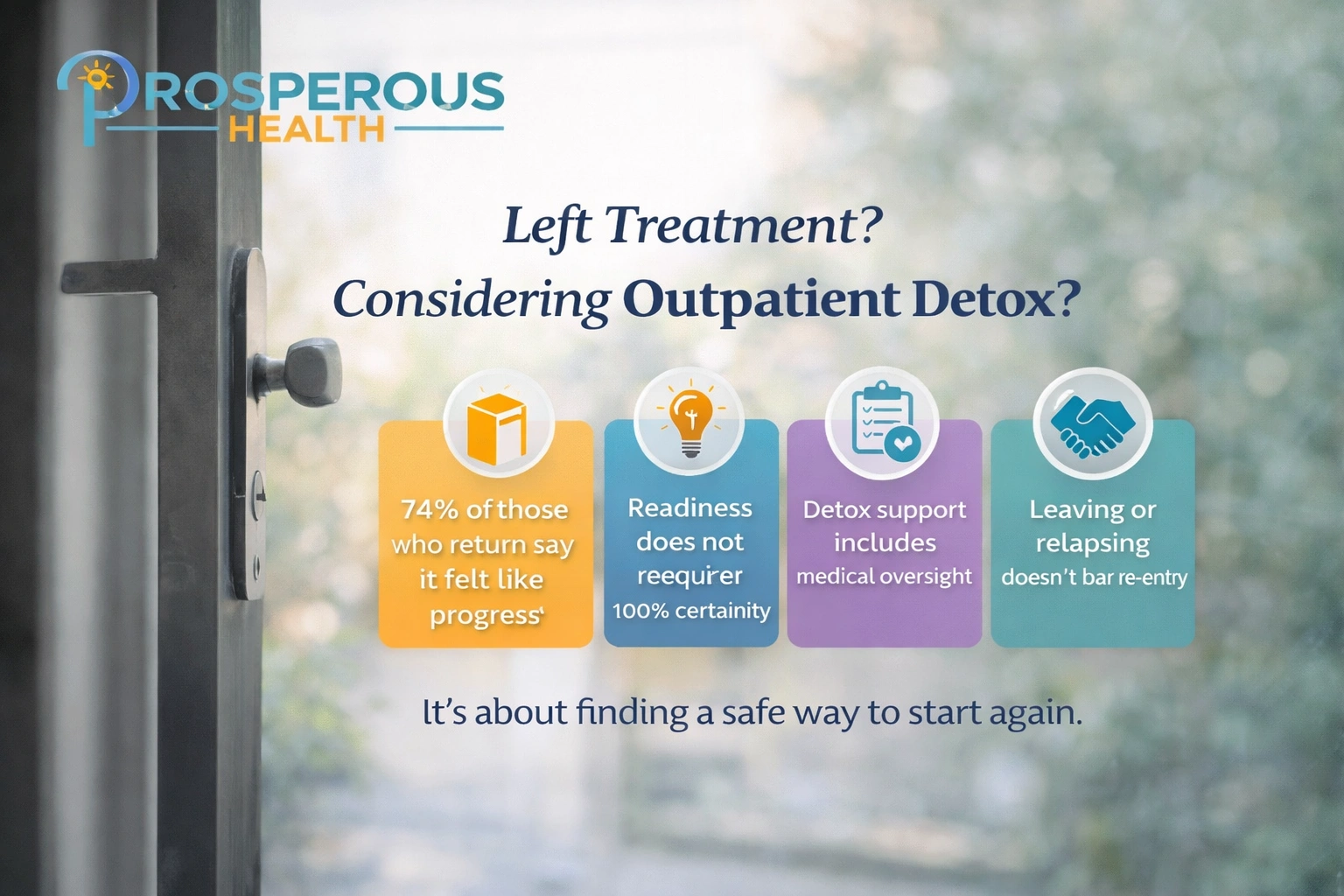
An outpatient model allows you to detox with medical oversight while still living at home.
You’ll have:
- Scheduled check-ins
- Medical monitoring
- Medication support if needed
- Clear safety planning
You sleep in your own bed. You wake up in your own space.
That can make the first step feel less overwhelming.
If you’re looking for help in California, options exist that balance safety with real-life responsibilities — including care in Irvine and support in Palos Verdes.
You don’t have to choose between your life and your health.
Step 3: Withdrawal Is Managed — Not Endured Alone
Let’s be honest.
Part of you might be scared of detox because you’ve tried before.
Maybe you white-knuckled it.
Maybe you felt sick, shaky, anxious, or unable to sleep.
Maybe you relapsed just to stop the discomfort.
Withdrawal can be physically and emotionally intense — depending on what you’ve been using.
That’s why medical detox exists.
You’re not expected to “prove” how tough you are.
Depending on your situation, providers may use medications to reduce:
- Anxiety and agitation
- Nausea
- Muscle aches
- Insomnia
- Cravings
You’ll have professionals tracking your symptoms and adjusting care if needed.
Detox isn’t about punishment. It’s about stabilization.
And stabilization increases your chances of staying the course.
Step 4: You’re Not Locked Into Residential After
A common fear is this:
“If I start detox, they’ll push me straight into live-in treatment.”
Not automatically.
After detox, you and your clinical team talk about what’s realistic.
Some people step into:
- Multi-day weekly treatment
- Structured daytime care
- Individual therapy
- Medication management
- Or continued outpatient support
Residential may still be recommended in certain cases, but recommendations are conversations — not commands.
We look at:
- Medical safety
- Your home environment
- Your support system
- Your readiness
This is collaborative care.
You are part of the decision-making process.
Step 5: If You Left Before, We Use That Information
Leaving treatment isn’t just a setback. It’s data.
It tells us something.
Maybe:
- The intensity felt overwhelming
- You felt pressured
- You weren’t ready to commit to long-term change
- You were afraid of being away from family
- You didn’t feel understood
Instead of shaming that, we learn from it.
What didn’t work?
What felt like too much?
What would make it feel possible now?
That conversation shapes the plan moving forward.
Treatment works best when it’s built around your reality — not someone else’s ideal timeline.
Step 6: You Don’t Have to Feel “Ready Enough”
Here’s something I say often as a clinician:
Readiness is not a lightning bolt. It’s a flicker.
You don’t need full confidence.
You don’t need certainty you’ll never use again.
You don’t even need complete motivation.
You just need to be tired enough of the current pattern to try something different.
Many people enter detox feeling ambivalent.
That’s allowed.
Ambivalence doesn’t disqualify you. It makes you human.
What Makes This Option Different From “Doing It Alone”
When people attempt to detox on their own, they often:
- Underestimate withdrawal severity
- Relapse to stop discomfort
- Experience medical complications
- Feel isolated and panicked
With medical oversight, you’re not guessing.
You have:
- Clear symptom tracking
- Access to medical guidance
- Immediate adjustments if things escalate
- Emotional reassurance
There’s a difference between suffering in silence and being supported through discomfort.
One increases risk.
The other increases safety.
The Emotional Part No One Talks About
Detox isn’t just physical.
Once substances leave your system, emotions can surge.
Anxiety. Sadness. Irritability. Fear.
Sometimes people say,
“I didn’t realize how much I was numbing.”
That’s not a reason to quit. It’s information.
You won’t be left alone with that emotional wave. Clinical support continues beyond the physical symptoms.
Detox clears the fog. What you do next determines the direction.
If You’re Afraid You’ll Leave Again
That fear makes sense.
You might think:
“What if I ghost again?”
“What if I can’t follow through?”
“What if I disappoint everyone?”
Here’s the truth:
Treatment isn’t built on perfection. It’s built on re-engagement.
If you stumble, you come back.
If you pause, you resume.
If you leave, you can return.
Recovery is rarely linear. And relapse or dropout doesn’t erase your capacity to try again.
The door stays open.
Frequently Asked Questions
What if I’m not sure I qualify for outpatient detox?
You don’t have to determine that yourself. A clinical assessment helps decide what level of care is safest for you. The first step is simply reaching out.
Is it safe to detox at home?
For many individuals, yes — with proper medical monitoring and guidance. Certain substances or health conditions may require higher levels of care. That’s why assessment matters.
What if my family doesn’t know I’m seeking help?
Confidentiality is protected. You can discuss privacy concerns during your intake conversation. Many people begin care without broadcasting it to everyone.
Will I be forced into residential treatment?
No. Recommendations are made based on safety and clinical need, but decisions are collaborative. If residential is suggested, you’ll understand why — and discuss options.
How long does detox usually last?
It varies depending on the substance and your health. Some detox processes last several days; others may take longer. The goal is stabilization, not rushing.
What if I relapse during detox?
Relapse is a risk in any recovery process. If it happens, you’re not expelled or shamed. We reassess and adjust the plan. Safety remains the priority.
I already left once. Why would this time be different?
Because now you have more information. You know what felt overwhelming before. That insight helps tailor a better plan. Growth often comes from earlier attempts.
If You’re Reading This at 2 AM
Let me say something plainly.
If you’re reading this in the middle of the night, uncomfortable, anxious, thinking,
“I can’t keep doing this” —
That thought matters.
You don’t have to commit to a 30-day stay. You don’t have to promise forever.
You can commit to stabilizing your body safely.
You can commit to one phone call.
You can commit to today.
If you’re ready — even a little — to explore a safer way to detox without immediately entering residential care, we’re here.
Call (888)308-4057 to learn more about our outpatient detox program services in California.