

When the Diagnosis Is New and the Pill Bottle Feels Like a Stranger
You’re here. That already says something.
Maybe you just left an appointment where someone used the word “alcohol use disorder” out loud—and it landed heavier than expected. Maybe you agreed to explore alcohol addiction treatment, but the part that’s sticking in your mind right now is the mention of medication.
It’s okay if that word rattles you a little. For a lot of people, it brings a swirl of fears:
“Am I really sick enough for this?”
“Will it change me?”
“Do I even trust this?”
At Prosperous Health, our alcohol addiction treatment in San Diego is built for real people—not ideal patients. We know that trust takes time. And when it comes to medication, we believe the conversation should be honest, slow, and centered on you.
Explore our alcohol addiction treatment services
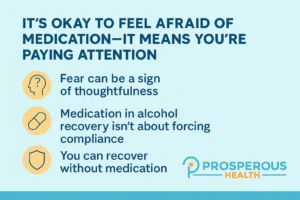
It’s Okay to Feel Afraid of Medication—It Means You’re Paying Attention
Fear can be a sign of thoughtfulness. You’re not just taking a prescription blindly—you’re asking questions. You’re trying to understand what it all means before saying yes. That’s wisdom, not resistance.
Medication in alcohol recovery isn’t about forcing compliance. It’s about offering one possible support that, for some people, makes the impossible feel more doable.
We meet people every day who say:
- “I don’t want to feel numb.”
- “What if it dulls who I am?”
- “I’m scared this means I’m broken.”
And we say: You’re not broken. And medication should never take away your you-ness. If it does, it’s not the right fit.
What Medication Isn’t in Alcohol Recovery
Let’s clear something up.
Medication isn’t a punishment.
It isn’t proof you’ve failed.
And it definitely isn’t the only way forward.
You are not being “put on meds.”
You are being offered support.
There’s a difference.
At Prosperous Health, we offer evidence-based medications such as naltrexone or acamprosate for alcohol addiction treatment—not because we believe pills fix pain, but because for some people, they give the nervous system enough room to breathe so healing can begin.
Medication isn’t a replacement for therapy. It’s a bridge. Sometimes temporary. Sometimes long-term. Always optional.
How Medication Can Support Recovery Without Taking Away Who You Are
We’ve had clients tell us, “I don’t want to lose my fire.” Especially those who’ve lived creatively or emotionally outside the lines.
So let’s be real: The right medication shouldn’t flatten your personality. It should help you show up more as yourself—especially when alcohol has been masking anxiety, depression, trauma, or loneliness.
Think of it like this:
If alcohol was the noise that kept you from hearing yourself clearly, the right medication might help you turn the volume down enough to listen again. Not to someone else’s voice. Yours.
For many people, that looks like:
- Fewer obsessive thoughts about drinking
- Better sleep (finally)
- Less emotional volatility
- A chance to do therapy without feeling like they’re white-knuckling every hour
And if it doesn’t feel right? We adjust. We pause. We explore other paths. No one is forcing anything here.
You’re Allowed to Be Curious, Cautious, and Conflicted
Not sure you’re “ready” for medication? That’s valid.
Worried it’ll be just another thing to depend on? Say it.
Heard horror stories and don’t want to be another statistic? We get it.
At Prosperous Health, we don’t treat questions like pushback. We treat them like doors opening. Some of the best conversations we’ve had with clients started with:
“I’m not saying no. I just need to understand more.”
And from there, we’ve explored together:
- What side effects are common—and which ones are rare
- What “success” really looks like
- What tapering off could involve later on
- How to know if it’s helping or not
- Whether you want to pair it with other options like trauma-informed therapy, group support, or mindfulness-based relapse prevention
You don’t have to become someone you’re not. You don’t have to rush. You get to decide, fully informed and fully supported.
You Still Get to Choose—With or Without Medication
Let’s say this clearly:
You can recover without medication.
You can also recover with it.
One way isn’t better than the other. It just depends on your brain, your body, your background, and what you need to feel steady enough to heal.
Some of our clients at Prosperous Health start medication, then transition off after a few months. Some find it helpful long-term. Some never use it at all. And they all deserve care that’s tailored, respectful, and stigma-free.
Whether you choose medication or not, we’ll walk with you. Not because you’re doing it our way—but because we believe in your way, and we’re here to help you discover it.
Medication Doesn’t Define Your Recovery—You Do
You’re more than a diagnosis. More than a prescription. More than whatever label scared you into Googling “what is alcohol addiction treatment?” at 2am.
Medication can be part of the story—but it’s never the whole book.
It might be a page.
It might be a chapter.
Or it might be a footnote.
You get to write the rest.
And when it feels overwhelming? When you’re not sure what to believe? We’re here to slow it down with you.
Frequently Asked Questions About Medication in Alcohol Addiction Treatment
Do I have to take medication to be in treatment at Prosperous Health?
No. Medication is never a requirement. We believe in informed choice and shared decision-making. You’ll never be pressured to take anything you’re not comfortable with.
What medications are used in alcohol addiction treatment?
Common options include naltrexone, which helps reduce cravings, and acamprosate, which supports the brain’s adjustment during early sobriety. We’ll explain each one carefully if you choose to explore them.
What if I have side effects or don’t like how I feel?
We monitor you closely, especially during the first few weeks. If something feels off, we adjust. You’re not locked into anything. Your experience matters more than the protocol.
Will medication make me feel numb or disconnected?
That’s a common fear. The right medication should reduce distress without numbing your personality. If you feel “off,” that’s a signal we take seriously—and we’ll work with you to fix it.
Is medication forever?
Not usually. For many people, it’s a short- or medium-term support. You and your provider will revisit the plan regularly, and you’ll always have a say in what’s next.
Can I combine medication with therapy or other supports?
Absolutely. In fact, medication often works best with therapy. At Prosperous Health, we offer integrated care that includes both clinical and holistic supports.
Local Support That Starts with Listening
We know it’s a big deal to trust someone with your care. Especially when the care includes words like “medication” or “diagnosis.”
That’s why every conversation at Prosperous Health starts with you. Not your file. Not your symptoms. You.
Whether you’re feeling cautious, curious, or conflicted, our San Diego team is ready to meet you where you are—with care that listens first, explains fully, and respects your pace.
Call (888)308-4057 or visit our alcohol treatment services page to learn more. You don’t have to commit. You just have to reach out. Let’s take it one step at a time—together.