

Introduction: You Don’t Have to Be Ready to Start
Receiving an alcohol addiction diagnosis can feel like a sudden shock—especially when you’ve been managing your life competently for years. It can spark fear, uncertainty, and a thousand questions: Do I have to quit right now? Will treatment destroy my career or identity? What is this going to feel like?
If you’re newly diagnosed and feeling overwhelmed or uncertain, you’re not alone. At Prosperous Health in Southern California, we meet people exactly where they are—so you don’t have to be an expert or crisis point to receive compassionate, practical care.
Here’s what many of our first-time callers want to know, answered clearly and without judgment.
1. How Do I Get Started?
What it’s like:
It begins with a phone call or a form on our website. We then schedule a no-pressure intake session—either virtual or in-person. This is a chance to talk about your drinking history, daily life, emotional health, support network, and any fears or goals.
That intake isn’t about labeling you or assigning blame. It’s about understanding your life to build a treatment plan that fits it—because recovery should work around you, not the other way around.
Why it matters:
A thoughtful start builds trust. Once you see that we see you, treatment becomes a partnership instead of an obligation.
2. Do I Have to Quit Immediately?
What it’s like:
No. There’s no time pressure or pass/no-pass test. We often encourage harm reduction—reducing or timing drinking—before full abstinence. This gives you space to gain confidence and avoid overwhelming guilt or fear.
As you feel safer, we explore next steps. Abrupt change isn’t required. Change that’s steady and safe is.
3. What Does a Typical Treatment Day Look Like?
What it’s like:
Programs vary based on client needs:
-
Outpatient: One or two classes a week
-
Intensive Outpatient (IOP): Three to five meetings per week
-
Telehealth and evening sessions: For work or family commitments
Sessions may include:
-
Small group therapy with others in early recovery
-
Individual talk therapy to explore deeper fears and patterns
-
Workshops on relapse prevention, stress management, and boundary setting
-
Holistic activities like mindfulness, movement, or creative expression
Everything is structured with flexibility and intention, so you can remain fully yourself throughout.
4. Does Treatment Require Medication?
What it’s like:
Not always—but sometimes yes. There are FDA-approved medications (like naltrexone or acamprosate) that help curb cravings or heal the brain. If detox is medically risky, we treat that first.
We’ll walk you through all options—how they work, what to expect, potential side effects. You never have to take medication unless you choose to. We support informed choice—not coercion.
5. What If I’m Too Ashamed or Scared to Start?
What it’s like:
Almost everyone feels that way at first. The key question isn’t why you feel ashamed—but how can we help you feel safe enough to start?
We take it one step at a time:
-
Listen—you say what matters to you
-
Normalize—you aren’t the only one feeling stuck
-
Before judgment—your choices aren’t moral failings
-
With care—we offer education, practice tools, community
This is about care, not shame. You don’t need to be “ready.” You just need to reach out.
What Treatment Helps With (Beyond Just Not Drinking)
Here’s what a personalized treatment plan can support:
Stress & anxiety management
You’ll learn tools to reduce tension without reaching for alcohol.
Connection & community
You’ll meet peers in recovery who understand your experience—not pity you.
Stronger routines
Healthy sleep, exercise, nutrition, and boundaries that protect your progress.
Life balance
Strategies to handle work, family, finances—all without alcohol as a buffer.
Relapse prevention
Skills to navigate triggers, setbacks, and everyday bumps in the road.
Support at this level isn’t fragile—it’s foundational.
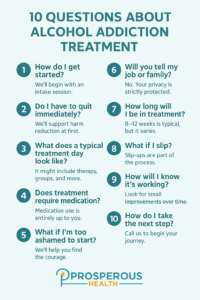
6. Will You Tell My Job or Family?
What it’s like:
No. Your privacy is protected. Your treatment is confidential unless you choose to share. Sessions aren’t reported to employers, and telehealth enables discreet care from home or office.
You decide who knows—and when.
7. How Long Will I Be in Treatment?
What it’s like:
Everyone’s path is different. Many begin with 8–12 weeks in an outpatient or IOP program, then transition to follow-up and peer support as needed. Some stay connected longer if they find it helpful.
We partner with you—not set fixed timelines.
8. What If I Slip—Will I Still Be Supported?
What it’s like:
Yes. Treatment isn’t turned off when your progress hesitates. Relapse is normalized as part of recovery. We re-evaluate your plan, reinforce strategies, and reconnect you to community and care.
We’re not waiting for perfection. We’re waiting for progress.
9. How Will I Know It’s Working?
Look for small changes, like:
-
Sleeping a bit easier
-
Remembering conversations
-
Feeling less guilt or dread
-
Managing stress with curiosity instead of escape
-
Being present with people again
Each quiet shift matters. Recovery is built on nuance—not drama.
10. How Do I Take the Next Step?
If any of this feels like safe ground, you’re already headed in the right direction.
📞 Call (888) 308‑4057 to talk with someone who cares about your first step.
🏠 Or visit our alcohol addiction treatment page to get more info, virtual tours, scheduling, and FAQs.
You don’t need to be at the end to begin. You just need someone compassionate enough to hold space for your questions—and that’s exactly what we do.