

Getting sober in your teens or twenties is hard. Staying sober? Even harder. Especially when everyone around you is still drinking “for fun,” using “just to chill,” or joking about being “a little depressed” but never talking about what that actually means.
When you’re sober and young, it can feel like you’re in a weird in-between space—no longer numbing your feelings, but also not totally sure how to live with them. And when those feelings include sadness, apathy, low energy, or just not caring anymore… that’s when it might be time to look deeper.
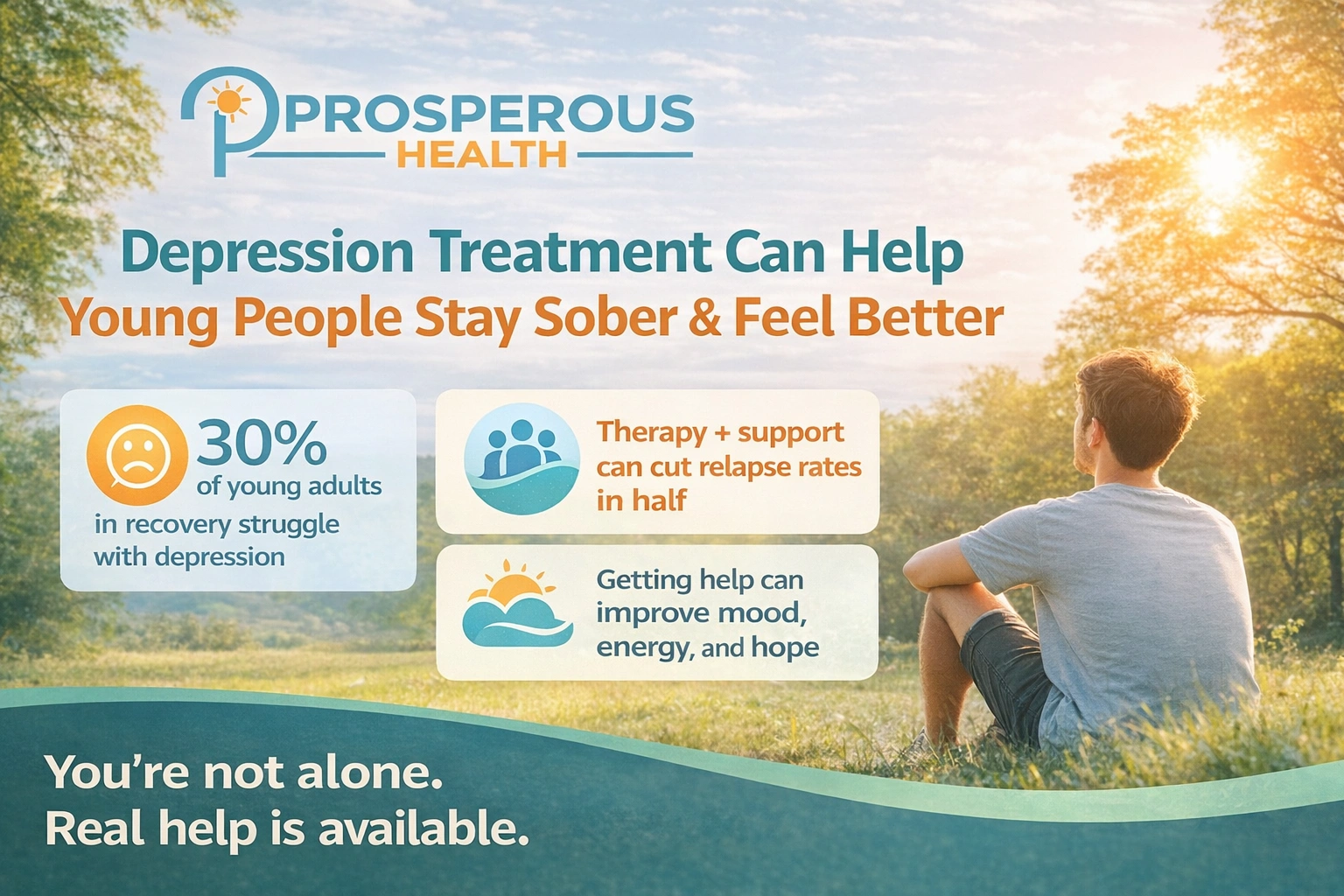
This is where depression treatment can help. Not because something’s wrong with you—but because you deserve to feel more than just “not using.” You deserve to feel like you.
1. Depression Isn’t Just Sadness—It Can Be Flat, Bored, or “Meh”
Let’s start here: depression doesn’t always look like crying in your room or feeling sad all the time. Sometimes, especially for young people, it looks like this:
- You feel numb. Like you’re just floating through your day.
- You don’t care about stuff you used to love.
- You stop texting back because it’s just… too much.
- You wake up tired, even after 10 hours of sleep.
- You go to meetings, class, or work, but it all feels pointless.
- You look fine from the outside—but inside, you’re checked out.
This isn’t just a “funk.” It might be depression. And you don’t have to wait for it to get worse to ask for help.
2. Sober + Depressed? You’re Not Alone
You did the hard part—you quit. You got clean. But maybe now you’re asking: Why don’t I feel better yet?
This is more common than people realize.
A lot of young people in early recovery feel emotionally flat. That’s partly because substances mess with your brain chemistry—and healing that takes time. But sometimes, depression was there long before the drinking or using started. Substances just masked it.
Now that the coping mechanism is gone, the underlying stuff is louder.
This is where treatment helps. Facilities that offer care in California, like Prosperous Health in Irvine, understand that sobriety doesn’t magically fix your mental health. It’s just one piece of the puzzle.
3. Depression Treatment Can Help You Stay Sober (And Feel More Alive)
Let’s be real: depression makes recovery harder.
When you feel hopeless, joyless, or numb, the old habits start whispering again. Just one hit. Just one drink to feel something.
Getting real depression treatment isn’t just about talking it out—it’s about getting ahead of that spiral. It helps stabilize your mood, rebuild your motivation, and remind you that joy is possible—even if it feels far away right now.
That might include therapy, peer support, medication, or group work. It might mean finding the actual cause of your mood shifts. It might mean creating a treatment plan that supports both your mental health and your recovery.
You don’t have to white-knuckle your way through. You’re allowed to get support.
4. You’re Allowed to Want More Than Just “Not Drinking”
It’s easy to get stuck in the loop of “Well, at least I’m sober.” And yes, being sober is huge. But it doesn’t mean you have to settle for feeling low, disconnected, or half-alive.
You’re allowed to want more than just “okay.” You’re allowed to want joy, energy, creativity, connection. Wanting those things isn’t selfish—it’s part of healing.
The best depression treatment meets you there. It helps you rediscover what lights you up—and gives you tools to deal with the stuff that dims your spark.
Programs that offer treatment options in Palos Verdes are built around young adults just like you—people who want more than just survival.
5. Therapy Can Feel Awkward at First—and Still Be Worth It
Let’s be honest: talking to a stranger about your emotions isn’t always comfortable. Especially when you’re young and everyone’s telling you to “just vibe” or “be grateful.”
But real therapy isn’t about clichés. It’s about finding someone who listens to what you’re actually saying—even the stuff that feels weird or heavy or stupid in your head.
A good clinician won’t lecture you. They won’t talk over you. They’ll meet you where you are and help you figure out what’s underneath the fog.
And sometimes? That one session where you say, “I don’t feel like myself anymore,” can be the turning point.
6. Medication Is Just One Tool—Not a Personality Eraser
If the idea of meds makes you nervous, you’re not alone. A lot of young people worry: Will I feel numb? Will I lose who I am?
Here’s the truth: medication for depression isn’t about changing your personality. It’s about helping your brain get back to baseline—so you can actually be yourself again.
Not everyone needs meds. But if your symptoms are intense, long-lasting, or getting in the way of basic functioning, it’s okay to consider them as one tool in your toolkit.
You deserve to have options—not just pressure to “get over it.”
7. You’re Not the Only One Feeling This Way
Depression makes you feel isolated. Like everyone else has it figured out. Like you’re the only one who feels flat while everyone else is living their best life.
You’re not.
So many young people in recovery carry secret sadness, loneliness, or numbness they don’t know how to talk about. If more of us were honest about it, we’d all feel a little less weird.
Getting depression treatment isn’t admitting defeat. It’s saying, “I want to feel better—and I believe that’s possible.”
That belief? It’s brave. And it’s enough to start.
FAQs: Depression Treatment for Young People in Recovery
How do I know if it’s depression or just early sobriety?
Early recovery does come with emotional ups and downs. But if you’ve been sober for a while and still feel persistently low, numb, or hopeless, it’s worth exploring treatment. A mental health provider can help you figure out what’s going on.
Can I do therapy even if I don’t have a “diagnosis”?
Yes. You don’t need a formal label to get support. If you’re struggling with your mood, energy, or motivation, that’s reason enough to seek help.
What if I’m afraid therapy will be awkward?
It might be—at first. But a good therapist will help you feel safe, not judged. You don’t have to know exactly what to say. Just showing up is enough.
Are there treatments besides talk therapy?
Yes. Treatment can include medication, creative therapies, group support, lifestyle changes, or trauma-informed care. Your plan should match your needs—not someone else’s template.
Will getting help mess up my sobriety?
No—in fact, it can strengthen it. Depression is a common relapse risk. Treating it head-on gives you more tools to stay grounded in your recovery.
You’re allowed to feel better—not just sober.
Call (888) 308-4057 to learn more about our Depression Treatment services in California.