

When your child relapses, the silence can feel louder than the worst fight. You wait for the phone to ring and dread when it does. You scan every text for hidden meanings. You remember the relief of their sobriety—and the crash when it ended. If you’re a parent watching your 20-something start drinking again after treatment, please hear this: you’re not the only one. And more importantly, this isn’t the end. It’s a moment. There’s still real, compassionate help available—alcohol addiction treatment that understands relapse isn’t a failure. It’s a turning point.
Relapse Doesn’t Mean It Didn’t Work—It Means More Support Is Needed
One of the first things I wish someone had told me is that relapse is common. Not because people don’t care about recovery, but because addiction is complex. My child’s first stay in treatment helped—but it didn’t heal everything. We both hoped it would be a one-and-done. When it wasn’t, I blamed myself. Then I blamed them. But the truth? Recovery often takes multiple attempts, just like healing after surgery sometimes needs rehab. It doesn’t mean it didn’t work. It means something more is needed.
That “more” might look like extended support, better aftercare, trauma-informed therapy, or a program that understands how to rebuild trust with someone who’s stumbled. The right alcohol addiction treatment isn’t a second chance—it’s the next right step.
It’s Normal to Feel Like You’ve Failed—But You Haven’t
Let me guess: you’re replaying every decision, every boundary, every time you drove them to therapy or let them come home. You’re wondering if being too soft made it worse. Or if being too firm pushed them away. I’ve asked myself all of it, too.
But here’s the thing no one told me until I was deep in support group meetings and sitting across from clinicians who’d seen it all: love doesn’t prevent addiction. And love doesn’t cause relapse. Addiction hijacks the brain. It doesn’t mean your child doesn’t love you, or that you didn’t do enough. You’re still in the story, and that matters.
What Alcohol Addiction Treatment Looks Like After Relapse
After relapse, treatment needs to be both familiar and different. Familiar, so your child doesn’t feel like they’re starting from scratch—but different enough to address what didn’t work the first time.
A second (or third) round of alcohol addiction treatment might include:
- A deeper look at co-occurring mental health issues like anxiety or depression
- A more structured setting, such as PHP or IOP with daily programming
- Trauma therapy if untreated past events are contributing
- Medication management if withdrawal symptoms or cravings are intense
- Realistic relapse prevention planning—not just hopeful thinking
- Family therapy that focuses on communication, not blame
Programs that offer care in California, like Prosperous Health in Irvine, are designed to meet young adults where they are—with the clinical skill and emotional understanding this phase requires.
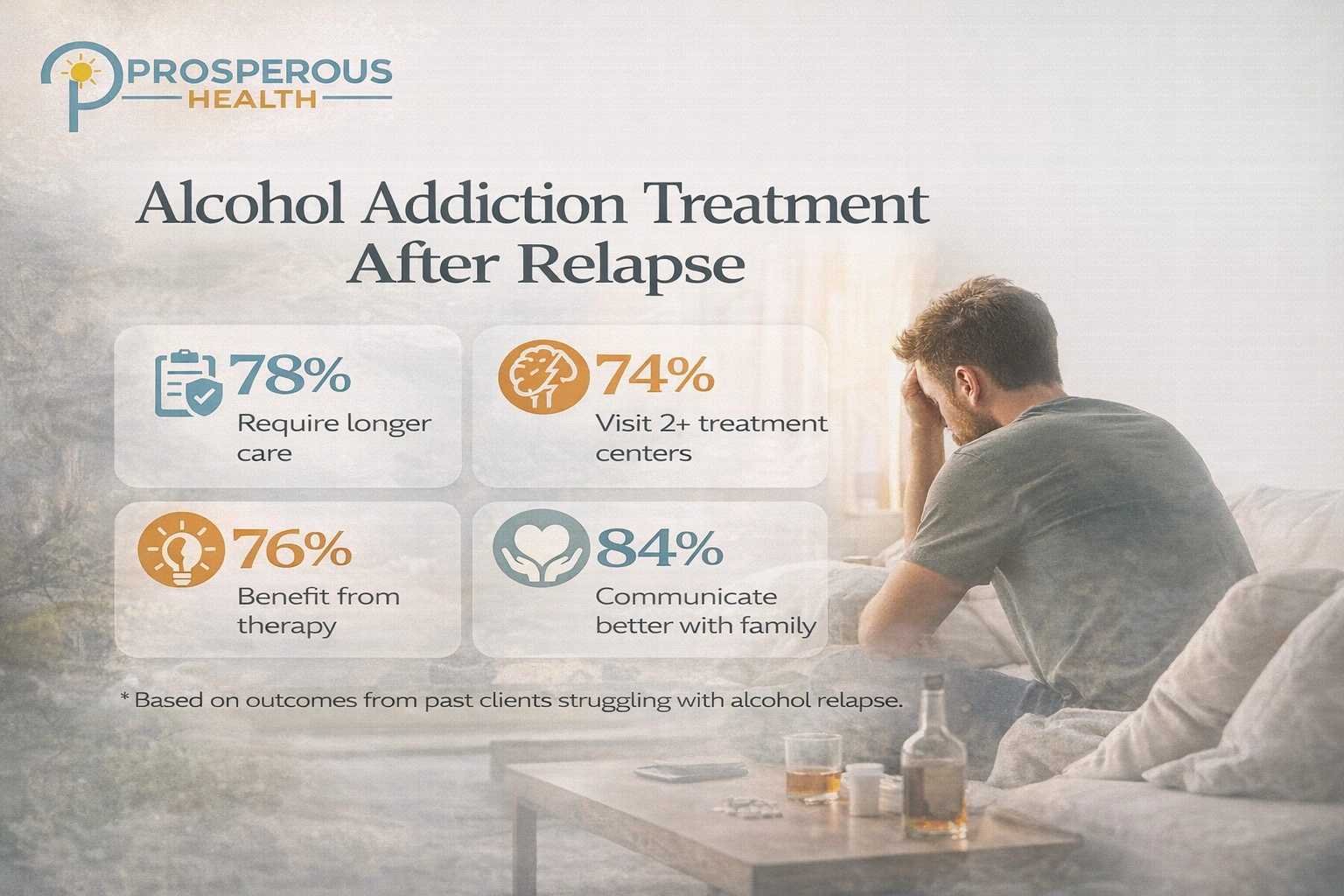
Your Child May Be Ashamed—But Connection Matters More Than Consequences
One of the most painful realizations I had was this: my child didn’t want to face me. Not because they didn’t love me, but because they were ashamed. They thought I’d be disappointed. And I was—but not in them. In how hard this disease fights.
That shame can be a wall. What helped us break through it wasn’t lectures or ultimatums. It was me saying, “I’m still here. I still love you. Let’s figure out what’s next.” That moment helped them say yes to treatment again. Shame isolates. Compassion invites.
Family Recovery Is Real—and Necessary
I didn’t realize I needed healing until I started to fall apart. I stopped sleeping. I braced for bad news every day. I was surviving, not living.
Good treatment programs know this. That’s why they offer family systems therapy, parent coaching, and education—not as an afterthought, but as part of the core plan. Because addiction isn’t just an individual illness. It impacts the entire family system. When parents start getting support too, everything begins to shift. We stop walking on eggshells. We learn how to set boundaries that protect connection, not sever it. We find our own voice again.
Programs like the treatment options in The Valley at Prosperous Health include this level of care—for your loved one and for you.
Healing Isn’t Linear—But Every Attempt Builds Something
I used to think relapse erased everything my child had learned. The coping tools, the insight, the sense of peace they had started to develop—it felt like it had vanished. But that’s not true. Healing isn’t linear. It loops, it stutters, it pauses. But it doesn’t disappear.
What my child gained during that first round of treatment? They brought it with them the second time. It helped them settle back in faster. They weren’t starting from scratch. They were returning with new insight and old strength.
When to Reconsider Treatment
If your child has relapsed, it’s okay to take a breath before jumping into next steps. But waiting too long can lead to more damage, especially with alcohol, which can seem deceptively manageable. Here are signs treatment should be reconsidered:
- Drinking has escalated beyond “casual” or “stress relief”
- They’re isolating more, avoiding work or school
- Their mental health has declined (e.g., depression, panic attacks)
- You’ve noticed dishonesty or dangerous behavior
- Previous coping tools aren’t being used anymore
If any of these ring true, getting them back into structured alcohol addiction treatment can provide safety, clarity, and a reset.
Frequently Asked Questions About Alcohol Addiction Treatment After Relapse
Does my child have to go to detox again?
It depends on how long they’ve been drinking and how much. Alcohol withdrawal can be dangerous, so a medical assessment is important. Some people need detox again; others can enter outpatient care with close monitoring.
Will the same treatment center accept them after a relapse?
Most likely, yes—many centers, including Prosperous Health, understand that relapse is part of the process. Returning clients are often welcomed back with an adjusted care plan tailored to current needs.
Should I let them come home if they refuse treatment?
This is a deeply personal decision. Boundaries around home life, especially when there are younger siblings or safety concerns, are important. A family therapist can help you create a plan that protects your values while staying open to reconnection.
How do I support them without enabling?
Supporting without enabling means offering emotional presence, not covering for consequences. That might look like: “I love you, and I’ll help you find treatment again—but I can’t give you money for rent while you’re drinking.”
Can treatment still work even if they’ve relapsed multiple times?
Yes. Some people need several attempts to find the right fit, tools, or internal readiness. Success isn’t how many times someone tries—it’s that they keep trying.
You’re Allowed to Ask for Help—Again
If no one has told you this today: you are doing better than you think. You’ve shown up, stayed connected, and are still searching for answers. That matters.
Alcohol addiction doesn’t follow a script. But that doesn’t mean your story ends in despair. There are programs—real, compassionate, effective programs—that understand the heartbreak and exhaustion of relapse. That know how to guide families through it with dignity and care.
Whether your child is ready today, or you just need someone to talk to—we’re here. If you’re in Southern California or nearby, you can explore in-depth, whole-family alcohol addiction treatment in California—where healing is built into every step.
Need help navigating next steps?
Call (888) 308-4057 to learn more about our Alcohol Addiction Treatment in Orange County, California.