
I used to believe addiction had a “look.” Missing teeth. Lost jobs. Late-night phone calls. Interventions.
That wasn’t me.
I had a great apartment. A decent title. A skincare routine. I wasn’t sleeping on park benches—I was replying to Slack messages at 7am and tracking macros on my lunch break.
But under that polish, I was medicating quietly and daily. Not to party—just to cope. Just to keep the panic down, the dread numbed, the edge off. And slowly, so slowly I almost missed it, my body started needing it to function. To feel normal.
By the time I called Prosperous Health’s outpatient detox program, I had “cut back” at least seven times. I had told myself this wasn’t addiction—just a rough season. I didn’t know how far I’d slipped until I tried to stop.
Here’s what my first week in outpatient detox actually looked like—not the polished version, but the real one. If you’re still wearing the mask, still holding it together in public, still saying “I’m fine” while your body quietly begs for relief, this is for you.
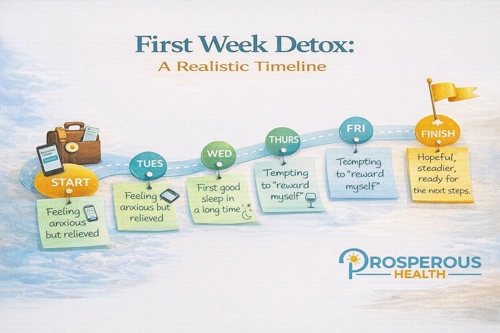
Day 1: I Almost Drove Away
I sat in my car for 20 minutes. I’d already made the appointment. I had already googled “outpatient detox that doesn’t ruin your life” and landed on Prosperous Health because the site didn’t feel shame-y or dramatic.
But still, I hesitated. My brain said:
- “You’re not that bad.”
- “Just take a week off. Reset. Hydrate.”
- “What if someone sees you?”
I walked in anyway. Tight-chested. Defensive. Ready to be told I didn’t qualify.
Instead, the woman at the desk said, “Glad you’re here.” And I nearly cried.
Day 2: The Body Talks
Day two was rough.
Not ER rough. Not trembling-on-the-floor rough. But like my body had been holding its breath for months and suddenly realized it didn’t know how to breathe on its own.
I wasn’t in danger. But I wasn’t okay either. There was nausea, chills, a tight buzzing under my skin. Withdrawal was real—and validating.
For years, I’d told myself I was being dramatic. That I could stop if I really wanted to. This was my body calling bullshit.
The staff didn’t overreact. They also didn’t minimize. They adjusted my medications. They checked in. And they let me be scared without making me feel stupid.
Day 3: Sleep Hit Me Like a Wave
That night, I slept. Deeply.
No 3am panic wakeups. No mental gymnastics. No sweat-soaked sheets.
It wasn’t just sleep. It was the first moment my body trusted it was safe again. I didn’t know how exhausted I was until I stopped pretending to be fine.
And let me be clear: this didn’t happen because I’m strong or special. It happened because my nervous system had the space—and support—to unclench.
Day 4: Cravings Came Dressed as Logic
Here’s what no one tells you: sometimes withdrawal isn’t loud. It’s sneaky. On day four, I felt clearer. More stable. And my brain saw an opening.
“You’re fine now. This was all you needed. You could have a glass. Just one. Maybe reward yourself for doing this.”
Cravings aren’t just about desire. They’re about escape. About that old coping loop flaring up when your brain hits open air.
I told the team. I half-laughed, like it was no big deal. They didn’t flinch. They said, “That voice is trying to keep you safe—the only way it knows how. But you have other options now.”
We talked about harm reduction. Emotional tolerances. How high-functioning addicts build castles on sand. That conversation did more for me than years of white-knuckled “cutting back.”
Day 5: Guilt Showed Up Loud
I started to remember things I said while buzzed. Conversations I flaked on. Deadlines I missed. I scrolled texts and saw vague excuses I barely remembered writing.
That day, the guilt came in hot. And for once, I didn’t shove it down.
We talked about how guilt is information—but it doesn’t get to drive. We talked about repair. About not needing to confess everything right away. About how shame thrives in silence but dies in context.
One nurse said, “You don’t need to be punished. You need to feel safe enough to be honest.”
That sentence stuck.
Day 6: I Started Letting People In
Until then, only the staff knew. I hadn’t told anyone else. I was afraid my friends would pity me. Or worse, say “You? Detox?”
But that day, I texted a friend:
“I’ve been in outpatient detox this week. I’m okay. I just wanted to let you know.”
She replied:
“I’m proud of you. Let me know how I can support you.”
That broke something open. I wasn’t hiding anymore. And I didn’t crumble. I actually felt taller.
Day 7: I Didn’t Want to Leave
That last day, I wasn’t “done.” But I was steadier.
I could eat without nausea. I could sleep without numbing. I could feel my feelings and not panic.
Outpatient detox didn’t fix everything. It gave me a floor. A space to land. A reset button I didn’t know I was allowed to press.
They gave me resources. Talked about next steps. IOP, therapy, sober curious groups. No pressure. Just options.
And for the first time in a long time, I felt like I had them.
What I Know Now (That I Didn’t Then)
If you’re in San Diego, still convincing yourself you can “handle it”…
If you’re drinking daily but calling it “wind down time”…
If you’re scared someone will find out but even more scared of what will happen if you keep going…
Let me say this:
You are not weak for needing help. You are strong for still showing up. And you do not have to wait for a rock bottom that might not leave you standing.
The outpatient detox program in San Diego, CA didn’t take over my life—it helped me get it back.
FAQs: Real Answers from Someone Who’s Been There
Is outpatient detox enough if I’ve been drinking daily?
Yes. If your body has developed dependence but you’re medically stable, outpatient detox can provide the supervision and meds needed to withdraw safely.
Will I have to quit my job or tell my boss?
Not necessarily. Outpatient detox is built for people with full lives. You can often schedule sessions around your work or personal needs. And everything is confidential.
What if I start and want to leave?
No one forces you to stay. But the team will work with you to address fears or barriers. You’re not trapped. You’re supported.
What if people find out I’m in detox?
They won’t—unless you tell them. The program is discreet. You don’t stay overnight. You don’t wear a badge that says “addict.” You’re just a person taking care of their health.
Will they think I’m not “sick enough”?
No. If you’ve tried to stop using and felt sick, anxious, or unstable, that’s enough. You don’t have to look wrecked to be taken seriously.
Can I still drink socially later?
That’s your call. Outpatient detox gets you stable and clears the fog. What you do after is your decision—but you’ll be clearer, calmer, and more in control when you make it.
If You’re Still “Holding It Together,” But Barely…
That’s where I was.
And if I hadn’t walked through that door, I don’t know where I’d be now.
This isn’t a life sentence. It’s a lifeline.
Call (888)308-4057 or visit Prosperous Health’s outpatient detox program page to find out what the first week could look like—for you.
If you’re looking for outpatient detox in San Diego, CA, know this: you don’t have to crash to be worthy of care. You just have to stop hiding. We’ll take it from there.