

Relapse has a way of convincing you that nothing works.
That all the effort, the therapy, the journal entries—it was all for show. I know because I went through it. I walked out of treatment sober, determined, full of hope… and then I drank again.
What followed wasn’t just another round of hangovers. It was something quieter. Heavier. I started to believe the worst thing someone in recovery can believe: that treatment didn’t work.
If you’re there—or somewhere close—I want to tell you something I wish someone had told me: relapse doesn’t mean you’re broken. And alcohol addiction treatment isn’t pointless, even if it didn’t “stick” the first time.
Here’s how alcohol addiction treatment in San Diego eventually helped me recover, for real.
I Thought Relapse Meant I Wasted My Shot
I remember the moment clearly: I was three months sober, had just finished outpatient treatment, and had dinner with some friends. One drink “to celebrate.” That’s all I told myself.
Two weeks later, I was drinking daily. Alone. Secretive. Ashamed.
I thought I had blown it. That maybe I wasn’t trying hard enough. That I just didn’t have “what it takes” to stay sober. I told myself maybe I wasn’t the kind of person treatment helps.
But what I didn’t know back then is this: relapse is common. In fact, it’s part of the process for many people.
Stat Block:
Up to 60% of people relapse after initial treatment. That’s not failure—it’s feedback.
And that feedback? It ended up guiding me toward the kind of healing I actually needed.
I Swore I’d Never Go Back
I’ll be honest: I avoided treatment for a long time after that.
Not because I didn’t need it—but because I didn’t want to feel like a disappointment all over again.
The thought of walking back into a group, telling a new therapist my story again, admitting that I had “messed up”? I couldn’t stomach it.
But the truth is, trying to fix it alone wasn’t working. I was tired. I was scared. And eventually, I wasn’t even sure who I was without alcohol anymore.
I didn’t go back to treatment because I believed in it—I went because I didn’t know what else to do. And oddly, that openness—being done pretending—was exactly what helped me start healing differently.
I Needed a Different Kind of Treatment
What I didn’t understand at first was that not all alcohol addiction treatment is the same.
My first experience had been helpful, yes—but it was surface-level. I’d followed the steps. I’d learned the language. But I hadn’t dug into the roots of why I drank in the first place.
At Prosperous Health in Palos Verdes, I found a different approach.
Instead of just tracking sobriety milestones, we worked on the emotional fallout underneath. Things I’d buried. Fears I hadn’t named. Trauma I hadn’t even realized I was carrying.
I learned that relapse doesn’t erase progress—it just exposes what still needs support.
I Stopped Measuring Success by Days Sober
In early recovery, I clung to that day count like a badge of honor. 30 days. 60. 90.
But the second I drank again, all of that felt wiped out. Like none of it counted.
That kind of thinking almost took me out.
This time around, I’ve started measuring success differently:
- Did I tell the truth today, even when it was awkward?
- Did I reach out when I felt shaky, instead of spiraling alone?
- Did I notice the urge to drink and choose something else—anything else?
Sobriety isn’t just about not drinking. It’s about building a life that doesn’t require escape.
And those small shifts? They’re how healing happens.
I Realized Relapse Was a Signal, Not the End
I used to think relapse was the end of the story. The final chapter.
Now I see it as a comma—a pause that pointed me back toward something I missed.
In treatment, one of the counselors said something I still think about:
“Relapse doesn’t cancel your work—it shows you where the work needs to go next.”
That mindset changed everything.
Instead of viewing relapse as proof that treatment failed, I started seeing it as a turning point. It was painful, yes. But it was also honest. It forced me to stop pretending I was “all good” and start getting real.
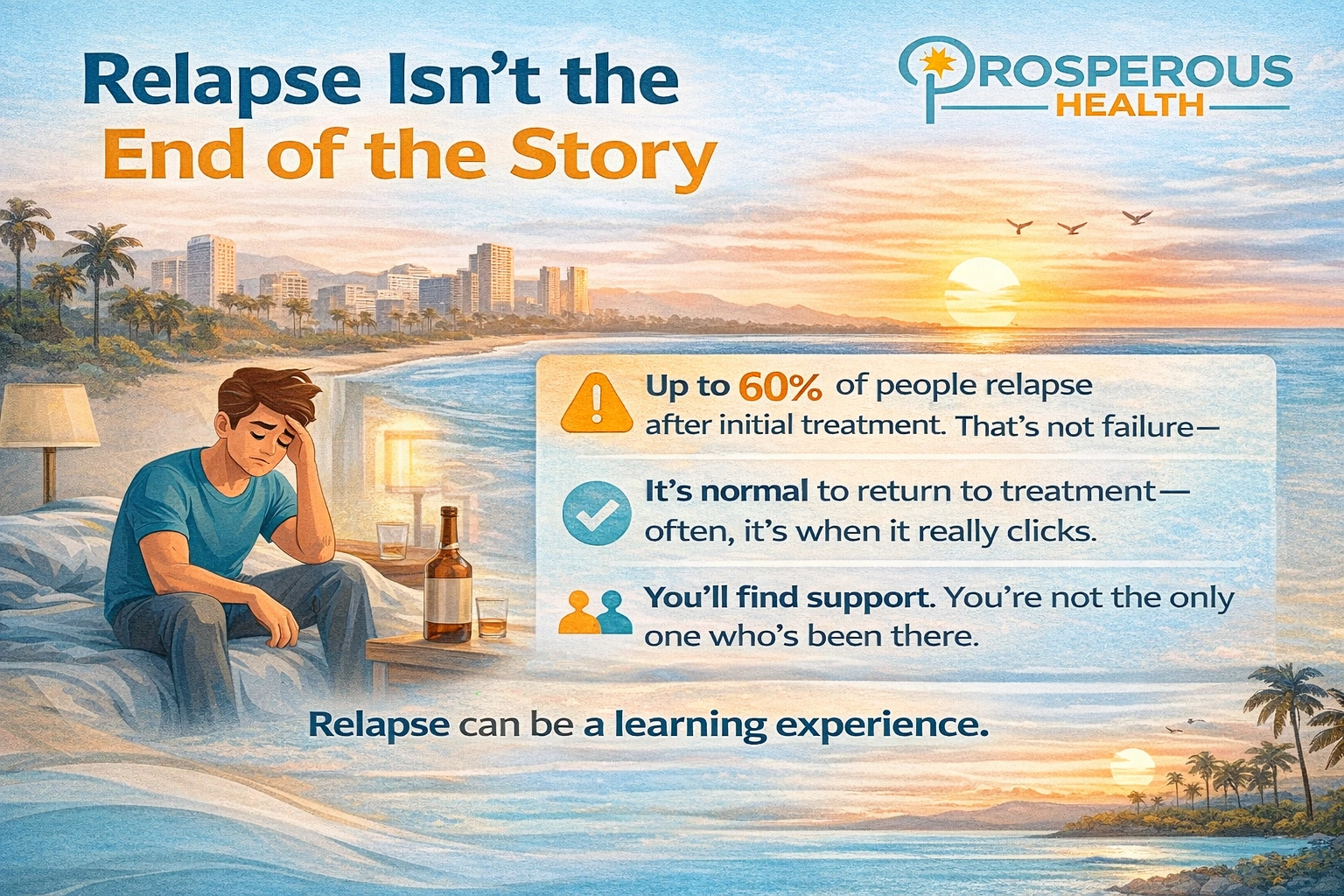
I Found People Who Had Been There Too
The second time in treatment, I didn’t put on a recovery performance.
I didn’t say what I thought counselors wanted to hear. I told the truth, even when it was ugly. And to my surprise, people got it. Because they’d been through it too.
There were others in my group who had relapsed, doubted, disappeared for months and come back anyway. No one looked at me like I was broken. They looked at me like I belonged.
That kind of honesty was more healing than any workbook.
And it reminded me: I’m not the only one who didn’t “get it right” the first time.
I Started Showing Up For Myself, Not a Program
The first time I went through treatment, I was all about checking boxes:
- Go to group
- Say the right things
- Make it to 90 days
But real recovery started when I began showing up not for approval, but for myself.
That meant being honest when I was struggling. Asking questions instead of pretending I had it all figured out. Letting go of shame and letting in support.
And this time, something’s sticking. Not because I’m perfect—but because I’m real.
FAQ: Alcohol Addiction Treatment After Relapse
Can I go back to treatment if I’ve already been once?
Absolutely. Many people return to treatment more than once—and often, it’s the second or third time when things truly start to click.
Will I be judged for relapsing?
No. At centers like Prosperous Health, relapse is seen as a part of the process—not a failure. You’ll be met with support, not shame.
How is this time going to be different?
That depends on you—and on the support you choose. The key isn’t doing the same thing again, but doing it more honestly, with the right tools and team behind you.
Is treatment in San Diego private?
Yes. Programs at Prosperous Health’s alcohol treatment center in San Diego are confidential and designed to respect your privacy and dignity.
I’m Not “Fixed.” But I’m Still Here.
I’m not writing this from some perfect place. I still get anxious. I still have cravings. I still fight that inner voice that says, “What if you screw this up again?”
But I also have tools now. Support. People. A sense of self that doesn’t disappear the second life gets messy.
And most of all, I have hope again. Not because I found a magic cure—but because I gave treatment a second chance.
Thinking About Trying Again?
If you’re in San Diego and wondering if it’s worth giving alcohol addiction treatment another shot—it is. Whether you’re holding shame, skepticism, or just a quiet ache for something better, you’re not alone.
Call (888)308-4057 or visit Prosperous Health’s Alcohol Addiction Treatment page to explore support built for real recovery—even after relapse.