

Everything Looked Fine—Until I Couldn’t Keep Faking
I wasn’t the cliché.
I didn’t drink in the mornings.
I didn’t lose my job or crash a car.
I didn’t hit some public rock bottom.
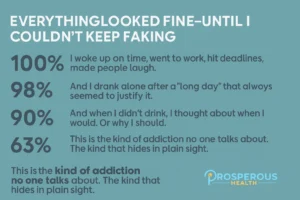
I woke up on time, went to work, hit deadlines, made people laugh.
And I drank alone after a “long day” that always seemed to justify it.
And when I didn’t drink, I thought about when I would. Or why I should.
This is the kind of addiction no one talks about. The kind that hides in plain sight. The kind that whispers, “You’re fine. You’re functioning.” Until one day, your body, your sleep, your relationships—or your soul—tells you otherwise.
What helped me wasn’t rehab. It was a lifeline I hadn’t considered: an Intensive Outpatient Program that respected my schedule, my brain, and my fear of being “found out.”
This is what I wish someone had said to me sooner.
I Looked “Fine” But Felt Completely Exhausted
I used to think addiction only looked like chaos. But mine was quiet. Strategic. Camouflaged.
I told myself I wasn’t that bad because:
- I had a steady job
- I didn’t drink at work
- I worked out (sometimes)
- I never blacked out
- No one had ever confronted me
But the truth? I couldn’t remember the last night I went to bed sober.
I was constantly anxious and tired.
I used wine as punctuation: end of the workday, end of dinner, end of pretending.
I wasn’t spiraling out of control.
I was slowly unraveling—while still showing up. And that’s what made it so easy to ignore.
I Thought I Had to Be Worse to Deserve Help
The idea of treatment felt dramatic. Overreactive. I figured:
- “Real” addicts lose everything
- I’d ruin my reputation if anyone found out
- If I just tried harder, I could fix it myself
I didn’t want to disappear into a 30-day program.
I didn’t want people at work asking questions.
I didn’t want to become the story I’d been avoiding.
Then, on a random Tuesday night—half-drunk, scrolling—I googled:
“Looking for Intensive Outpatient Program in San Diego, CA”
And that’s how I found Prosperous Health.
IOP wasn’t detox or rehab. It was structured help, 3 days a week, in the evenings. It let me keep my job. Keep my life. But start being honest.
And that? That was enough to crack open the door.
IOP Felt Like the First Place I Didn’t Have to Perform
Walking in the first day, I half expected everyone to be in withdrawal or crisis. Instead, I met teachers, parents, creatives, engineers—people just like me.
People who had been holding their breath for months.
People who were tired of pretending.
People who weren’t “sick enough” by the world’s standards—but hurting anyway.
Group didn’t fix me. But it made me real again.
I got to say things like:
- “I don’t know if I belong here”
- “I’m terrified of being boring without drinking”
- “I’m angry at myself for needing help”
And nobody flinched. Nobody corrected me. They just nodded.
For the first time, I didn’t have to perform my pain. I could just feel it.
Sobriety Didn’t Kill My Spark—It Made Room for It
I was afraid of losing my edge.
Drinking made me social, sharp, witty. It felt like the thing that let me connect. But over time, it also became the thing that kept me distant—from others, from myself.
What I learned in IOP was that my creativity didn’t come from alcohol. It just came through it because I didn’t know how else to feel safe being honest.
Sobriety didn’t silence me. It cleared the distortion.
Now:
- I laugh without worrying about what I said
- I sleep through the night
- I remember my weekends
- I cry when I need to
- I say no without guilt
And slowly, the spark came back. Not because I forced it. Because I stopped numbing it.
High-Functioning Doesn’t Mean Happy
I was doing well by most standards. But I wasn’t okay.
I didn’t feel joy. I didn’t feel rested. I didn’t feel proud of how I was coping.
That’s what I want to say to anyone who thinks they’re “not bad enough” to need help:
You don’t have to lose everything to want something better.
You don’t have to hit bottom to want to climb.
You just have to be tired enough of pretending.
FAQs About High-Functioning Addiction and IOP
What is an Intensive Outpatient Program?
It’s a structured treatment program that meets several times a week (often in the evenings) so you can keep working or caring for family while getting support. It includes therapy, group sessions, and skill-building.
Can I be in IOP if I’m still working or in school?
Yes. Most IOP programs are designed around people who need flexibility. At Prosperous Health, we work with your schedule—not against it.
What if I’m not sure I’m “addicted”?
You don’t need a label to deserve help. If you’re using substances to cope and it’s starting to affect your emotional, physical, or mental well-being, that’s enough to explore IOP.
Will I be judged for not hitting rock bottom?
Not at all. Many IOP participants are high-functioning professionals who are seeking support before things get worse. That’s strength, not weakness.
What if I try it and decide it’s not for me?
That’s okay. The door doesn’t lock behind you. We work with where you are—and support your right to change paths as needed.
You Don’t Have to Be Loud to Be in Pain
The truth is, the quiet addictions are often the loudest inside.
They’re the ones that hide behind smiles. They don’t interrupt—they erode. Slowly. Gently. Until you wake up and realize you’re living in grayscale.
For me, IOP was the first time someone said:
“You don’t need to fall apart to ask for help.”
If that’s you? You’re not alone.
You’re not dramatic.
You’re not weak.
You’re just tired of keeping it all together for everyone else.
Call (888)308-4057 or visit our Intensive Outpatient Program page to talk with someone who sees behind the surface. Quiet courage is still courage. And you don’t have to do this alone.