

You’ve made progress.
You’ve cut back. Maybe you’ve stopped drinking or using. You’re going to therapy. You’re reading books, trying meditation, saying no more often. You’re starting to feel a shift—but also something unexpected:
A question.
Is this enough?
For some people, outpatient therapy or light recovery work is enough. But for others—especially those dealing with heavier emotional weight, persistent mental health struggles, or more complex patterns—it just doesn’t stick. Or it starts to crack under the pressure of real life.
You’re not doing it wrong. You might just need more structure, more support, or more time to heal.
That’s where a Partial Hospitalization Program (PHP) comes in.
Learn more about our Partial Hospitalization Program in San Diego, CA.
1. You’re Doing the Work, But Still Feel Emotionally Wobbly
You’re showing up. You’re journaling. You’re in therapy.
But still—your moods swing hard. A small trigger knocks the wind out of you. You feel okay for a day or two, then spiral into anxiety, numbness, or doubt.
This doesn’t mean therapy isn’t working.
It means you may have outgrown outpatient care as a primary container.
Outpatient (usually one session per week) is powerful—but limited. If you’re feeling:
- Constantly overwhelmed
- Unsure how to implement coping skills between sessions
- Alone in your healing process
…that’s a sign you need more frequent support. PHP offers several hours of structured, therapeutic care daily—designed for people who are ready to go deeper.
2. You Feel Alone Between Appointments
If you’re holding it together for 6.5 days each week, then releasing everything in a single 50-minute therapy slot, you’re not alone—but you are overextended.
In outpatient, it’s easy to feel like you’re writing your own recovery playbook. There’s no one to check in when things feel unsteady between sessions. No community. No rhythm. No accountability.
PHP bridges that gap. It’s:
- Daily therapeutic connection
- Peer groups that normalize your experience
- A sense of belonging that helps you breathe again
You don’t have to white-knuckle through the week anymore.
Looking for Partial Hospitalization Program in San Diego, CA? Our PHP was built to give you something steadier to stand on.
3. Mental Health Symptoms Are Getting Louder, Not Quieter
Anxiety. Depression. Mood swings. PTSD. Even if you’re not using, the underlying issues may still be impacting your ability to live freely and fully.
If you’ve noticed:
- You’re isolating more than before
- Emotions feel unmanageable or confusing
- You’re struggling with suicidal thoughts, self-harm, or emotional dysregulation
…that’s not something to “wait out.” It’s a sign that outpatient therapy alone might not be enough.
At Prosperous Health, our PHP provides dual diagnosis care—meaning we treat mental health symptoms and substance use together, not separately.
You are not “too much.” You’re just ready for something deeper.
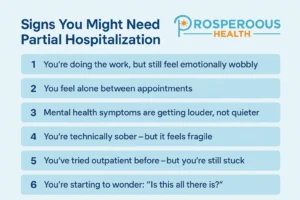
4. You’re Technically Sober—But It Feels Fragile
Maybe you’ve been sober for a few weeks or months. But the cravings are real. The emotional lows are confusing. And the fear of slipping is hanging over everything.
This is a common—but often overlooked—phase of early recovery. And it’s where many people either plateau… or return to old patterns.
Partial Hospitalization Programs offer a structured, safe space to:
- Understand what’s underneath your urges
- Practice healthier coping skills daily
- Explore your relationship to stress, shame, or identity—without pressure to be perfect
It’s not just about staying sober. It’s about not suffering while doing it.
5. You’ve Tried Outpatient Before—But You’re Still Stuck
If you’ve been in therapy for months (or years), but you’re still struggling with the same stuck points, it’s okay to want more.
That doesn’t mean therapy failed you.
It means your needs have changed.
PHP gives you:
- More hours to explore complex patterns
- More modalities—group therapy, skill-building, trauma work
- More access to clinical support and case management
If outpatient helped you stabilize, PHP can help you transform.
Looking for Partial Hospitalization Program in Palos Verdes, CA? We offer step-up and step-down options across California.
6. You’re Starting to Wonder: “Is This All There Is?”
This one can be hard to explain—but easy to feel.
You’ve made progress. You’ve done the steps. But life still feels flat. The joy hasn’t returned. You’re going through the motions.
That question—“Is this it?”—can be a powerful invitation.
Because PHP isn’t just about crisis prevention. It’s about emotional expansion.
It’s about rediscovering who you are underneath all the layers of coping, performing, or surviving.
You don’t have to settle for numb.
You’re allowed to want more.
FAQs: What to Know About PHP Before You Decide
How long does PHP last?
Most programs run 2–6 weeks, depending on your needs. Our team works with you to create a flexible, individualized plan.
Will I have to stop working?
You may need to adjust your work schedule temporarily. Many clients use FMLA or PTO to prioritize treatment. We’ll help you explore options that protect both your health and your livelihood.
What happens after PHP?
Many people “step down” into an Intensive Outpatient Program (IOP) for continued support. You’ll work with our team to plan the next steps that make sense for you.
Do I need a diagnosis to join?
No. If you’re sober curious, emotionally overwhelmed, or ready to go deeper, we’ll assess what level of care fits. You don’t need a label to deserve help.
Is PHP only for addiction?
Not at all. Our Partial Hospitalization Program also supports people with anxiety, depression, trauma, and other mental health needs—even if substance use isn’t present.
If you’re asking whether outpatient is enough—it probably isn’t anymore.
Call (888)308-4057 to learn more about our Partial Hospitalization Program services in San Diego, CA.