
Sometimes Life Pulls You Away. That Doesn’t Mean It’s Over.
If you stopped showing up to treatment, you’re not alone—and you’re not a failure. Plenty of people pause or disappear from programs, even with the best intentions. Life gets heavy. Some days, even logging in or getting dressed can feel impossible.
Maybe you were juggling too much. Maybe shame crept in after a tough week. Maybe you ghosted because it felt easier than explaining.
Whatever happened, it’s okay. What matters now is this: you’re thinking about coming back. And a virtual intensive outpatient program (IOP) might be the softer landing you need.
You Don’t Have to Justify Your Exit
You might be thinking, “They probably don’t want me back.” That thought keeps a lot of people stuck. But here’s the truth: recovery isn’t a straight line, and treatment isn’t a one-shot deal. People leave programs for all kinds of reasons—overwhelm, crisis, disconnection, even small daily barriers that pile up.
At Prosperous Health, we don’t expect a big apology. We don’t need a detailed reason. We understand that re-entry should feel safe, not awkward.
Why Virtual IOP Can Be a Gentler Way Back
Virtual IOP doesn’t mean less care. It means more flexibility, especially if in-person treatment felt too heavy or too hard to sustain. Here’s why it might be the right fit now:
- No commute. Whether you live in central San Diego or further out, driving to a center can feel like a hurdle—especially if you’re dealing with depression, anxiety, or burnout.
- Low pressure re-entry. Starting virtually allows you to rebuild trust with treatment at your own pace.
- Private and personal. You can log in from your room, a parked car, or wherever you feel safest. That sense of control can make all the difference.
- Real support still happens. Group therapy, individual sessions, and evidence-based approaches are all still part of the structure.
For many who felt overwhelmed by in-person schedules, our virtual IOP offers a more sustainable rhythm.
Missing Treatment Doesn’t Mean You “Blew It”
Let’s name the fear: “If I stopped showing up, maybe I wasn’t ready. Maybe I don’t deserve to try again.”
That voice is shame talking. And shame is a lousy motivator for change. The truth? Taking a break, missing sessions, or ghosting a program doesn’t mean you’ve failed. It often means you hit a wall—and that’s worth understanding, not punishing.
Many clients circle back after stepping away. And they often find that virtual IOP helps them stay connected in ways that feel doable. It’s not about pretending the dropout didn’t happen. It’s about recognizing what you need now.
You’re Allowed to Start Again—Without Grand Gestures
Coming back doesn’t have to look like a redemption arc. There’s no need for a dramatic comeback or public explanation. You can start quietly. You can test the waters.
It might look like:
- Making a single phone call.
- Asking about session times before committing.
- Scheduling one intake appointment to see how it feels.
That’s enough. That’s valid. Whether you were gone for two weeks or six months, the door is still open.
Virtual Support Still Feels Real—Even Through a Screen
If you’re worried virtual care will feel distant or flat, you’re not alone. A lot of people assume online support won’t be as meaningful. But here’s what we’ve seen:
- Clients often open up more when they’re in their own space.
- Group connections can feel just as real, especially over time.
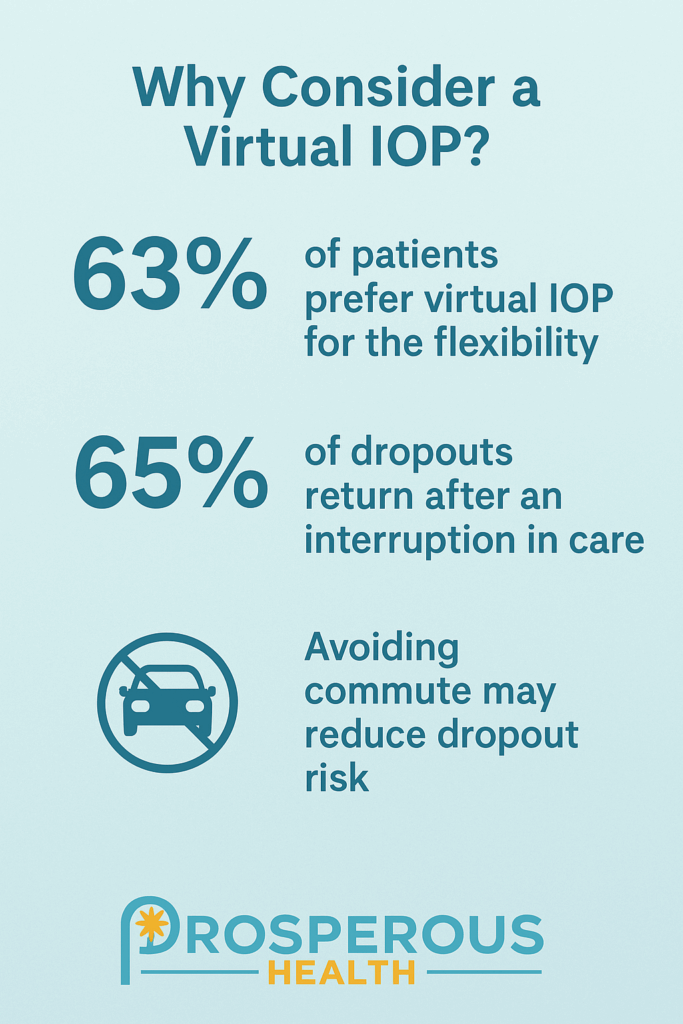
- Virtual check-ins often allow for more flexibility, which reduces dropout risk long-term.
Plus, our clinical team is trained to recognize disconnection signs early. We know how to reach out gently when someone seems to be pulling away.
Looking for Virtual IOP in San Diego?
If you live in San Diego County, there are local benefits to choosing a virtual IOP rooted in your community. Our team knows the local recovery landscape, understands what San Diegans are navigating, and can help you connect with in-person services when and if you’re ready.
For more details about the services we offer near you, visit our San Diego location page.
Quick Tips for Re-Entering After Dropping Out
- Drop the guilt. Shame keeps people stuck. Compassion gets people moving.
- Start small. One call, one intake, one login.
- Ask about flexibility. Virtual programs are often more adaptable than you think.
- Keep the door open. You don’t have to commit forever. Just see if this step helps.
- You’re not the only one. Quiet restarts happen every day. You’re not alone.
FAQ: Virtual IOP for Returning Clients
What is a virtual IOP, and how is it different from traditional IOP?
A virtual intensive outpatient program provides the same structured care—like group therapy, one-on-one counseling, and recovery planning—but you attend online. It’s ideal for those needing flexibility or hesitant to return to in-person settings.
Do I have to explain why I stopped coming before?
No. While we’re here to support your whole story if you want to share it, you’re not required to explain your absence. We understand that treatment interruptions happen, and we focus on helping you move forward.
Can I start a virtual IOP if I previously dropped out of an in-person one?
Yes. Many clients find virtual IOP easier to stick with, especially if logistical barriers or emotional overwhelm made in-person treatment hard.
How do I know if a virtual program is right for me?
If you’re looking for structure but need flexibility—if you’re nervous about re-entry but still want support—virtual IOP might be the right balance. A phone consult can help clarify your fit.
Is virtual care really effective?
Yes. Research shows that virtual IOPs can be just as effective as in-person care for many people, particularly when supported by trained clinicians and strong peer connections.
What if I’m using again? Will I be turned away?
No. Using again isn’t disqualifying. You don’t have to be “perfect” to start again. We’ll meet you where you are and help assess what level of care fits best right now.
Ready to Talk?
Call (888)308-4057 or visit to learn more about our virtual IOP services in San Diego, CA. The door is still open—and it’s okay to walk through it slowly.