

You didn’t imagine it would happen like this.
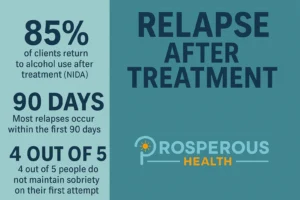
Not after 90 days. Not after the progress, the clarity, the peace you’d started to feel.
But it did. And now everything feels loud again—shame, fear, self-doubt.
If you’re reading this after a relapse, know this: you’re not starting from zero.
Alcohol addiction treatment isn’t just for first-timers—it’s here for anyone who needs to come back home to themselves.
You Didn’t Ruin Everything
Relapse doesn’t erase the work you’ve done. It’s not a moral failure or a full reset. It’s a signal—one that something needed more attention, more support, more safety. And that’s okay.
Shame says, “You blew it.”
Compassion says, “You’re still worthy of care.”
At Prosperous Health, we don’t treat returning clients like they’ve failed. We treat them like the brave individuals they are—people who know when to reach out again, even when it’s hard.
Relapse often comes with that aching thought: “I should have known better.”
But sobriety is not about never falling—it’s about learning how to get up with gentleness.
What Relapse Often Means (That No One Talks About)
Relapse is rarely random. It usually carries quiet messages that went unheard. It can happen in stillness, in busyness, in the swirl of life where no one else notices—but you feel the pull. The pressure. The emotional fatigue.
Sometimes, relapse means you’ve outgrown your old coping tools. Sometimes it means grief showed up months after the funeral. Or loneliness whispered a little too loudly on a Friday night. Or the structure that once held you—meetings, therapy, community—slipped out of reach.
Many people relapse not because they don’t care about their recovery, but because they care for everyone else more than themselves.
Relapse is a signal. It’s asking:
What needs tending now?
Alcohol Addiction Treatment Can Be a Return, Not a Restart
The word “treatment” might sound rigid or clinical. But at Prosperous Health, we see treatment after relapse as a reconnection—a realignment with what matters to you.
This might be the first time you’re seeking help since returning to use.
Or maybe you’re wondering, “Do I really need treatment again? Can’t I just regroup on my own?”
You can try on your own. Many do. But you don’t have to.
Re-engaging with alcohol addiction treatment gives you structure, safety, and support—especially when guilt and shame make it hard to think clearly. It gives you space to unpack what happened without judgment.
And this time around, you’re not a beginner.
You’re someone who knows what recovery feels like. That’s a strength—not a liability.
Healing Doesn’t Expire at 90 Days
The truth is, early milestones can feel like checkpoints. Thirty days. Sixty. Ninety. One year.
But those numbers don’t tell the whole story.
Sobriety is not a linear ladder. It’s a spiral. You revisit old themes with new eyes. You bump into old triggers wearing new disguises. And healing happens in layers, not straight lines.
Just because you’ve relapsed doesn’t mean your previous sobriety was fake, failed, or meaningless. That version of you existed. And it can exist again.
Sometimes, relapse is the moment we shift from surviving sobriety to truly living it.
You’re Not Alone (Even If It Feels That Way)
The most painful part of relapse isn’t always the act itself—it’s the isolation that follows.
Maybe you haven’t told anyone.
Maybe you ghosted your sponsor or skipped your group meetings.
Maybe you feel like the people who cheered you on would be disappointed or ashamed.
Let’s say it plainly:
You are not the only one who’s been here. You are not broken. You are still worthy of love, support, and recovery.
And yes—you are allowed to come back.
Whether it’s been weeks, months, or longer, you can return to treatment without having to explain everything or apologize for where you’ve been.
At Prosperous Health in Palos Verdes, we see you as a whole person. Not just a slip. Not just a statistic. A human being deserving of kindness, structure, and another shot.
What Returning to Treatment Might Look Like
You might wonder: What would I even do in treatment again? Would it just be a repeat?
Not at all.
Here’s what re-engaging with alcohol addiction treatment can look like at Prosperous Health:
- A warm, judgment-free clinical assessment to understand what’s going on now—not just what happened before
- One-on-one therapy that explores the emotional terrain of relapse, shame, and next steps
- Alumni-informed group support, where people get it—because they’ve been there, too
- Trauma-informed care if deeper roots need tending
- Flexible outpatient schedules that fit your current life
This isn’t about going “backward.” It’s about moving forward from exactly where you are.
You don’t need to be in crisis to return. You just need to be ready to feel better.
From Disconnection to Reconnection
Often, relapse is less about alcohol and more about disconnection—from self, from community, from the practices that keep us anchored.
When you re-enter treatment, you’re not just stopping a behavior. You’re reconnecting with the part of you that wants to live well—and has already proven it can.
Treatment helps you find your center again.
It helps you remember that you’re not your worst day.
It helps you stay.
Is It Worth It to Return to Treatment After a Relapse?
Yes. Every time.
Because every time you return, you’re honoring your life. You’re saying, “I’m not giving up.” You’re saying, “I still believe in healing.”
That’s worth everything.
Frequently Asked Questions
What if I relapsed but it was “just once”? Do I still need treatment?
Even a single relapse can stir up emotional overwhelm, shame, or uncertainty. You don’t need to wait for things to spiral before seeking support. Treatment can help you stabilize, reflect, and prevent further escalation—whether the slip was brief or ongoing.
Will I be judged for coming back after relapse?
Absolutely not. At Prosperous Health, we view returners with deep respect. Relapse is a known part of many people’s recovery. It’s never a source of shame here—it’s a sign of strength that you’re returning for care.
How is alcohol addiction treatment different after a relapse?
When you come back after a relapse, you’re not starting from scratch. We tailor your care plan to your current needs, which may include addressing new stressors, life transitions, or emotional experiences that contributed to the relapse.
Can I still work or take care of my family while in treatment?
Yes. Our outpatient programs in San Diego are designed to offer flexible care while you maintain responsibilities. Many returning alumni find outpatient treatment to be the ideal balance between structure and independence.
How do I start again if I feel ashamed?
Start by acknowledging that shame is normal—but it doesn’t get the final say. One call, one message, one small act of reaching out is enough to begin. You don’t have to have everything figured out to be welcomed back.
You Can Still Come Home to Yourself
You’re not broken. You’re not back at the beginning. You’re someone who made it once—and can again.
Whether you’ve been quietly struggling or openly hurting, it’s okay to need help again. It’s okay to come back.
At Prosperous Health in San Diego, we offer alcohol addiction treatment that honors where you’ve been and gently helps you find your way forward.
Call (888) 308-4057 to learn more about our Alcohol Addiction Treatment services in San Diego, Ca. We’ll meet you with respect, clarity, and care.